
NEVER A DULL MOMENT: The Bantams of Valley Parade—A History Of Bradford City AFC, John Dewhirst
With the last complete history book about Bradford City being long out of date (Terry Frost’s Bradford City: A Complete Record, 1903-88, Breedon, 1988), and whilst subsequent books have dipped into parts of the Bantams history, John Dewhirst has written a concise and approachable history of the West Yorkshire based football club, charting events leading up to and since 1903, but importantly covering some fairly tumultuous times over the last forty years, which roughly half of the book is devoted to.
John Dewhirst
John Dewhirst, a Bradford City supporter since 1972, is a keen historian and has written many books, particularly associated with the origins of professional football in Bradford.
Of special note are the Bantamspast History Revisited Series, of which some are shown below, and are incredibly well researched and insightful books documenting events going back over 100 years (more details and the full range of books can be seen at www.bantamspast.net).
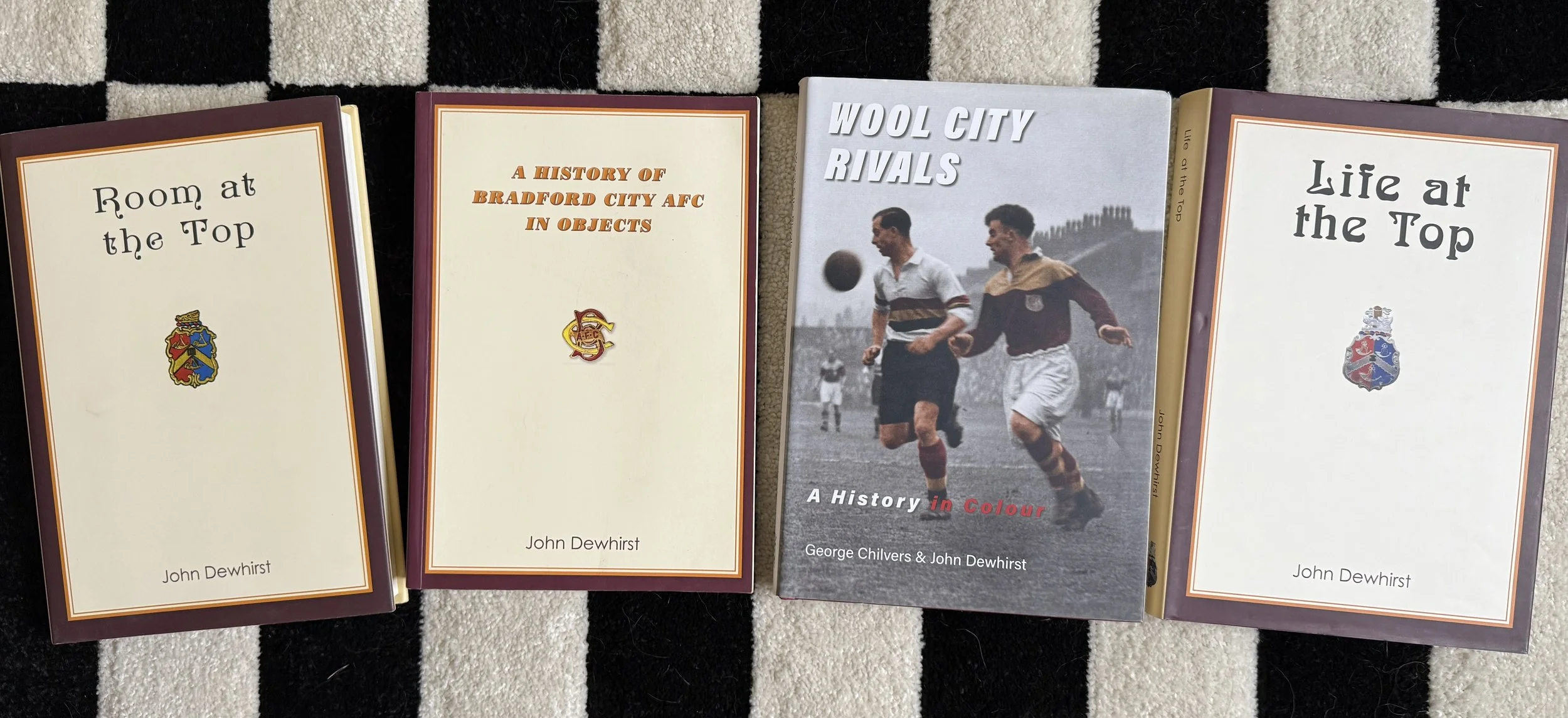
Some of John Dewhirst’s previous books (Image: Damien Wilkinson)
With Dewhirst also involved with the long-standing City Gent fanzine, co-founding it back in 1984, and also helping the club from a financial review perspective as it lurched from one financial administration to the next, during the post Premier League years, he is perhaps uniquely placed to curate such an important history.
The Bantams of Valley Parade
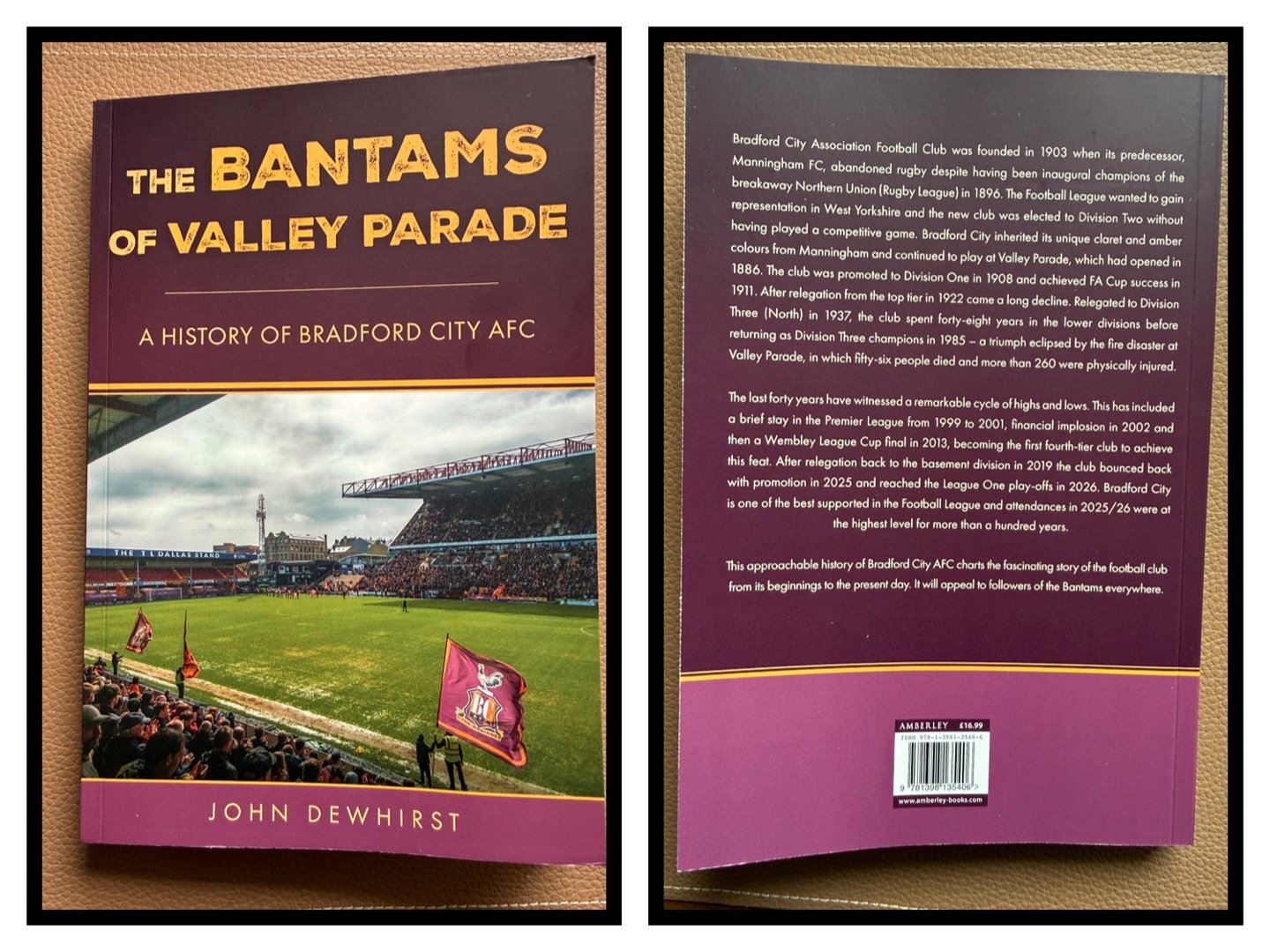
The Bantams Of Valley Parade, John Dewhirst (Images: Damien Wilkinson)
Team Talk
The book’s introduction sets the scene; the emergence of the club from the rugby playing Manningham FC, the ongoing rivalry with Bradford Park Avenue until 1974, and despite winning the FA Cup in 1911, a good deal of its history has seen cycles of ambition overtaken by false hopes of overreach and instability.
Dewhirst aims to offer an antidote to books about more glamorous clubs—the times of failure (and disaster) more than outnumber the successes, but with that the resilience shines through the Bantams identity.
Aiming to set aside some of the myths and imagined history, the book aims to outline the conditions the club has operated within; it is by no means a season-by-season chronicle.
The First Half
The first half of the book, broadly takes events leading up to the club’s formation in 1903 right through to 1985.
Dewhirst traces the club’s roots back to the rugby-playing Manningham FC in the 1880s—explaining the origins of the iconic claret and amber colours—and details the 1903 conversion to Association Football. The early high-water marks, including the 1911 FA Cup triumph and a 5th-place Division One finish, soon gave way to decades of financial strain, World War I losses, and repeated relegations.
Dewhirst highlights the critical role of supporter organizations like the BCSSA in keeping the club afloat during the 1950s, as well as the modernising impact of chairman Stafford Heginbotham in the 1960s and 70s. Through a sobering analytical lens, Dewhirst also examines how the ongoing rivalry and failure to merge with Bradford Park Avenue cast a long shadow over both clubs’ viability.
Overall the first half of the book helps put the ups and downs of the second half into context, Dewhirst draws out the ingrained underachievement, perennial failures, living in the shadows of more illustrious neighbours and repeated financial crises well, and whilst these were destined to follow this rinse-repeat cycle for much of the future years, it represents a very insightful analysis.
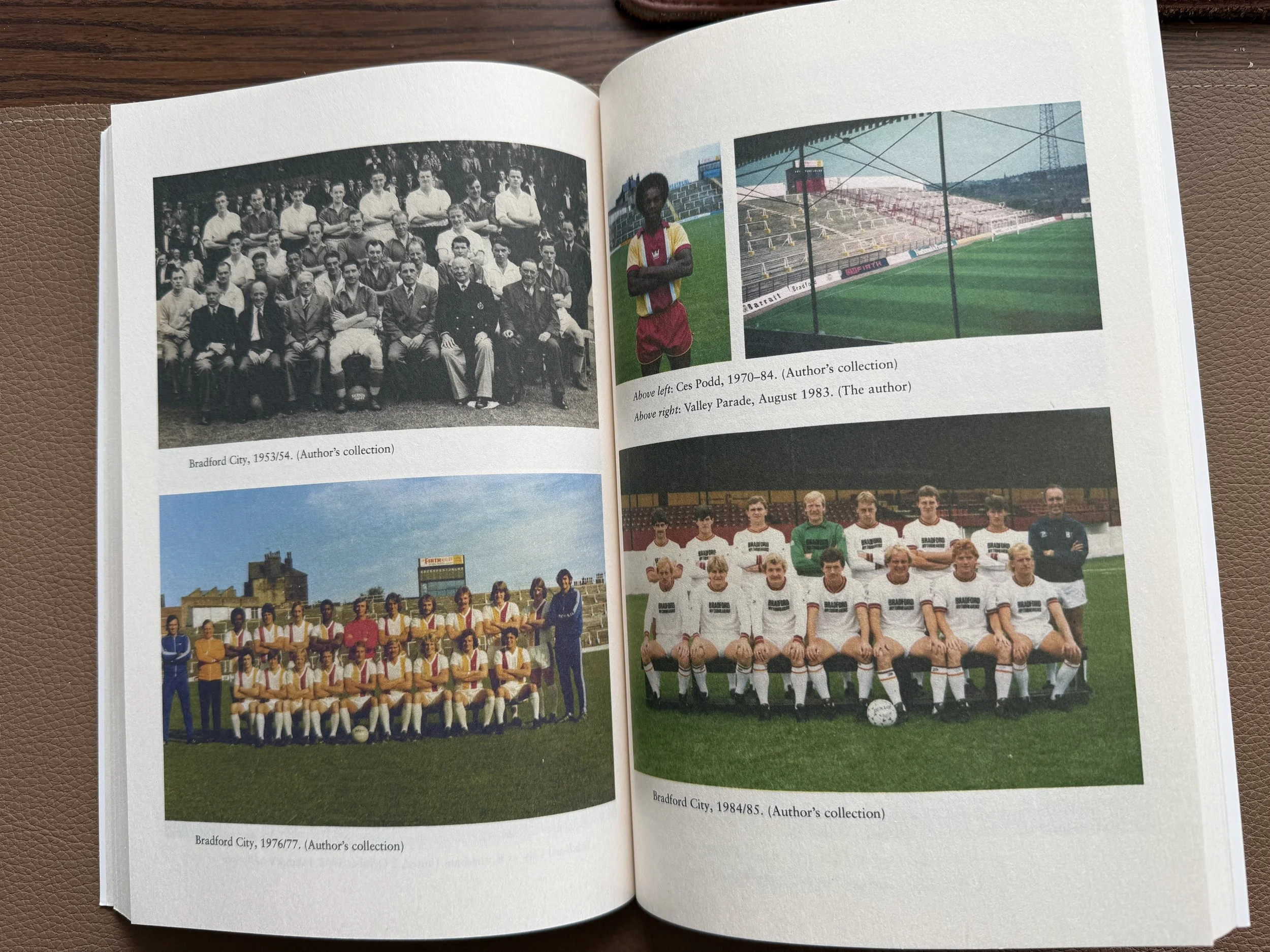
Some images from The Bantams of Valley Parade, John Dewhirst (Image: Damien Wilkinson)
Half-Time
Poignantly, dealing with events from 1985, there is an appropriate pause to reflect on the place of Valley Parade in the overall history of the club. Throughout the first half, Dewhirst highlights, ongoing issues with the Valley Parade ground, especially in the wake of World War Two (Midland Road being declared unsafe in 1948), providing a further drain on scarce funds.
Naturally, Dewhirst sensitively documents the horrific events of the 11th May 1985 and the Valley Parade fire, which broke out on a day celebrating promotion and the Third Division title, and this poignantly acts as a bridge to the rebirth of the club covered in the book’s second half.
The Second Half
There’s a lot to cover in the last forty years and the book appropriately devotes a good deal of its pages to covering the frantic roller-coaster ride familiar to contemporary supporters:
The Rebuild & The Richmond Era: The physical rebuilding of Valley Parade, followed by the high-stakes tenure of Geoffrey Richmond, whose "Premier League in five years" promise famously delivered top-flight football under Paul Jewell.
The Premier League & The Fallout: The intoxicating highs of top-flight survival quickly gave way to administration, financial collapse, and a helter-skelter slide down the divisions.
Modern Cycles: From the optimism of the Phil Parkinson era (including a historic League Cup Final run in 2013) to the turbulent years under Stefan Rupp and Edin Rahic, Dewhirst captures the relentless dramatic cycle of life at Valley Parade and the various characters that have played their part.
The second half sees Dewhirst review the Richmond era in forensic detail and whilst it was clear that the massive gamble was never going to pay off—it still makes truly grim reading in hindsight. In stark contrast he paints a much more refreshing picture of the recent set-up, which has finally seen an escape from past boom-and-bust cycles, signifying the club is now on stronger and more sustainable foundations.
Having witnessed much of this period, it is a sobering account of many of the highs and lows of being a supporter, with certain events, both on and off field, still causing a sharp intake of breath as you relive them. There has certainly never been a dull moment, when you look back!
Footnote:
In true Valley Parade fashion, no sooner had the book left the printing press then another chapter unfolded. Manager Graham Alexander’s departure to Preston North End brought an end to a successful three-year tenure. However, with the club sitting atop League One and the subsequent appointment of Michael Duff, there is every reason to believe the current stability can be maintained.
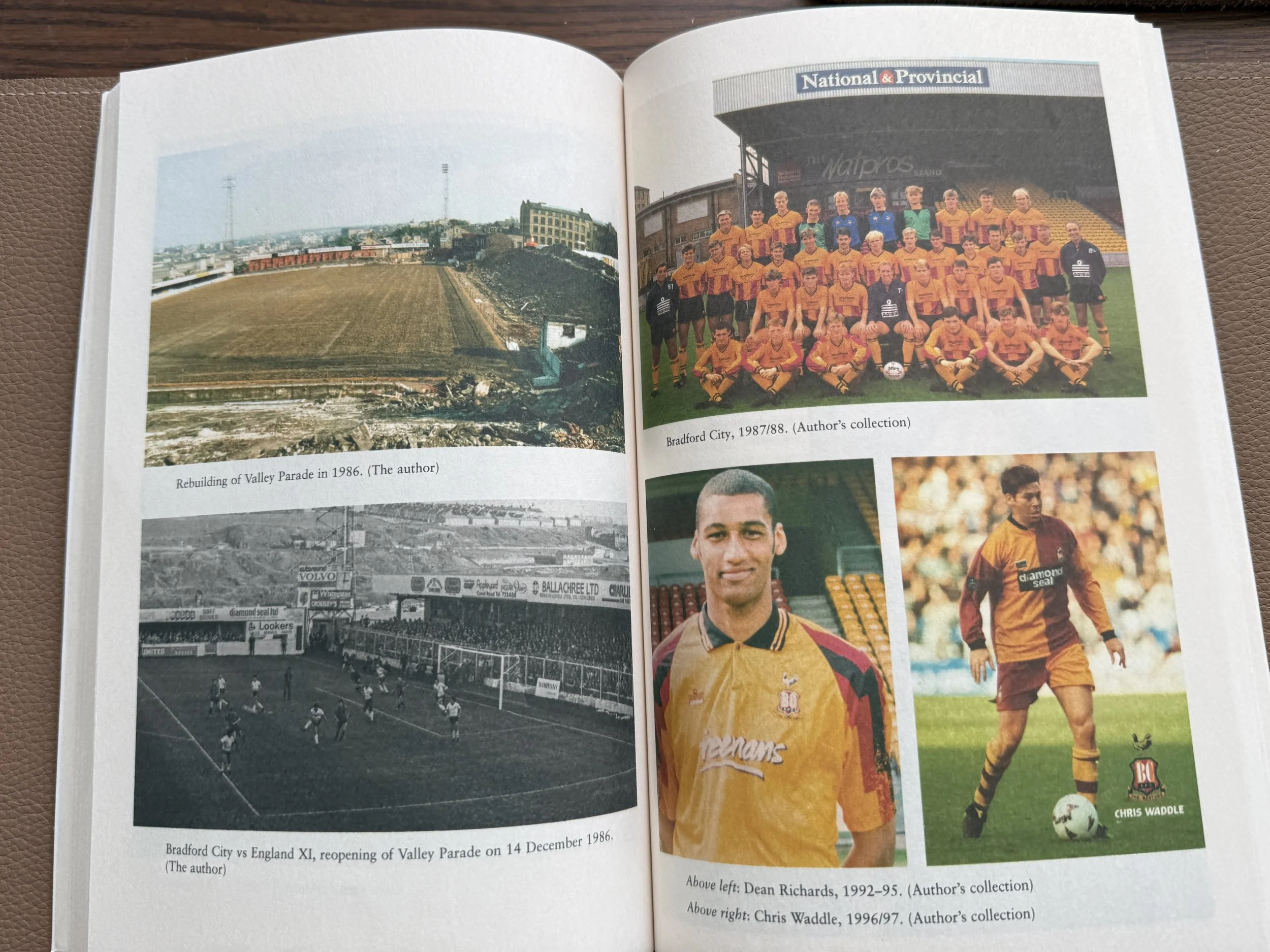
Some images from The Bantams of Valley Parade, John Dewhirst (Image: Damien Wilkinson)
Injury Time
The book closes with acknowledgments and some pictorial charts of League Records and Attendances over the club’s history, charting the statistics against those of close neighbours, Bradford Park Avenue, for good measure.
The Match Report
The paperback book, over its 160 packed pages, covers a vast amount of information and insight into the history of Bradford City AFC. There are also photographs going right back to 1892, which chart some of the key events over the club’s proud history.
Dewhirst has crafted a tightly written, beautifully researched tapestry of Bradford City AFC. It manages to pack an immense amount of historical context into a concise format without ever overwhelming the reader. For City diehards, it is an essential read; for the broader football historian, it is a fascinating case study in English football's enduring trial of survival and resilience.
Book Details:
Publisher: Amberley Publishing
Format: Paperback, 160 pages (Illustrated)
Where to buy: Available online, via the Amberley Publishing website, and at all good booksellers.
