THE BOY IN BRAZIL: Terraces, Time Travel, and the Beautiful Game
The Backstory Archive: Back in 2012, I was still firmly strapped to the corporate wheel, flying across hemispheres for business trips measured in spreadsheets and hotel lobbies. At the tail end of a stint in São Paulo, I found myself with a few hours of freedom, missing a Bradford City home game against Exeter, and hunting for a football fix. Looking back from life’s Second Act, this was a quiet reminder that no matter how deep you are in the corporate grind, the things that truly shape us—the noise, the terraces, the curiosity—are always waiting just outside the office door.
A version of this article first appeared on the award-winning football site The Width of a Post in November 2012.
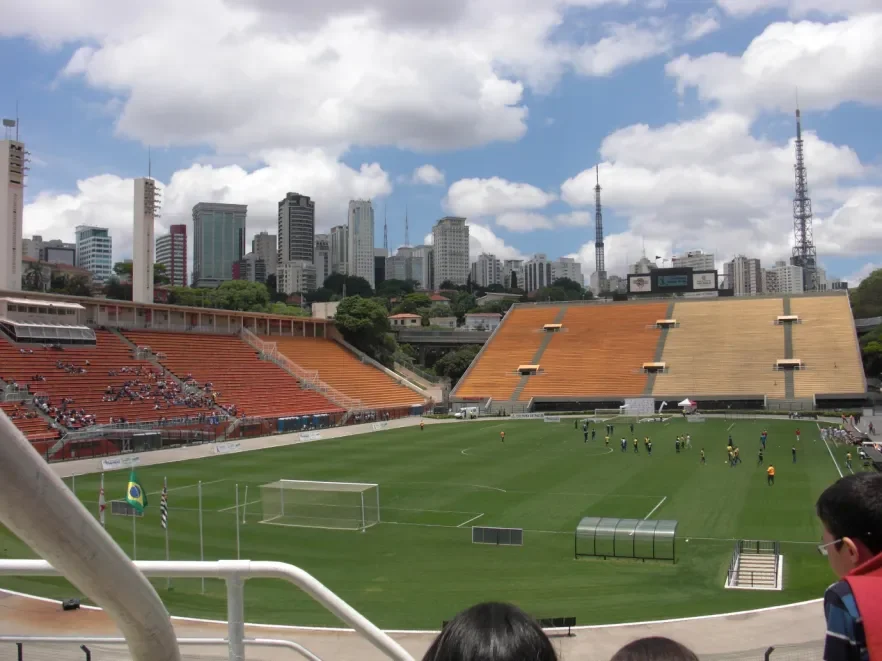
Estádio Municipal Paulo Machado de Carvalho (Image: Damien Wilkinson)
Swapping Neymar for History
I found myself with time to kill at the end of a business trip to Brazil. Back home, Bradford City were hosting Exeter City at Valley Parade. I was missing the antics, the cold air, and the routine, so I went looking for a local football fix.
São Paulo is the fourth largest city in the world—a sprawling concrete ocean of 20 million people. The local passion for futebol is legendary. The city boasts giants like São Paulo FC, Corinthians, and Palmeiras. A bit further down the coast sits Santos FC, the proving ground of Pelé and, at the time, a young spark named Neymar Jr. It sounded like the perfect recipe.
Then reality intervened. Local fixture timings and a public holiday meant most matches were scheduled for Sunday, clashing directly with my flight back to the UK. There was a tempting evening kick-off for Santos, but it morphed into a logistical nightmare: navigating a 50-kilometre return bus journey around midnight in a sprawling megacity. Common sense and personal safety prevailed.
I swapped the chance of seeing Neymar Jr. for a trip to São Paulo’s football museum, housed inside the grandly titled Estádio Municipal Paulo Machado de Carvalho.
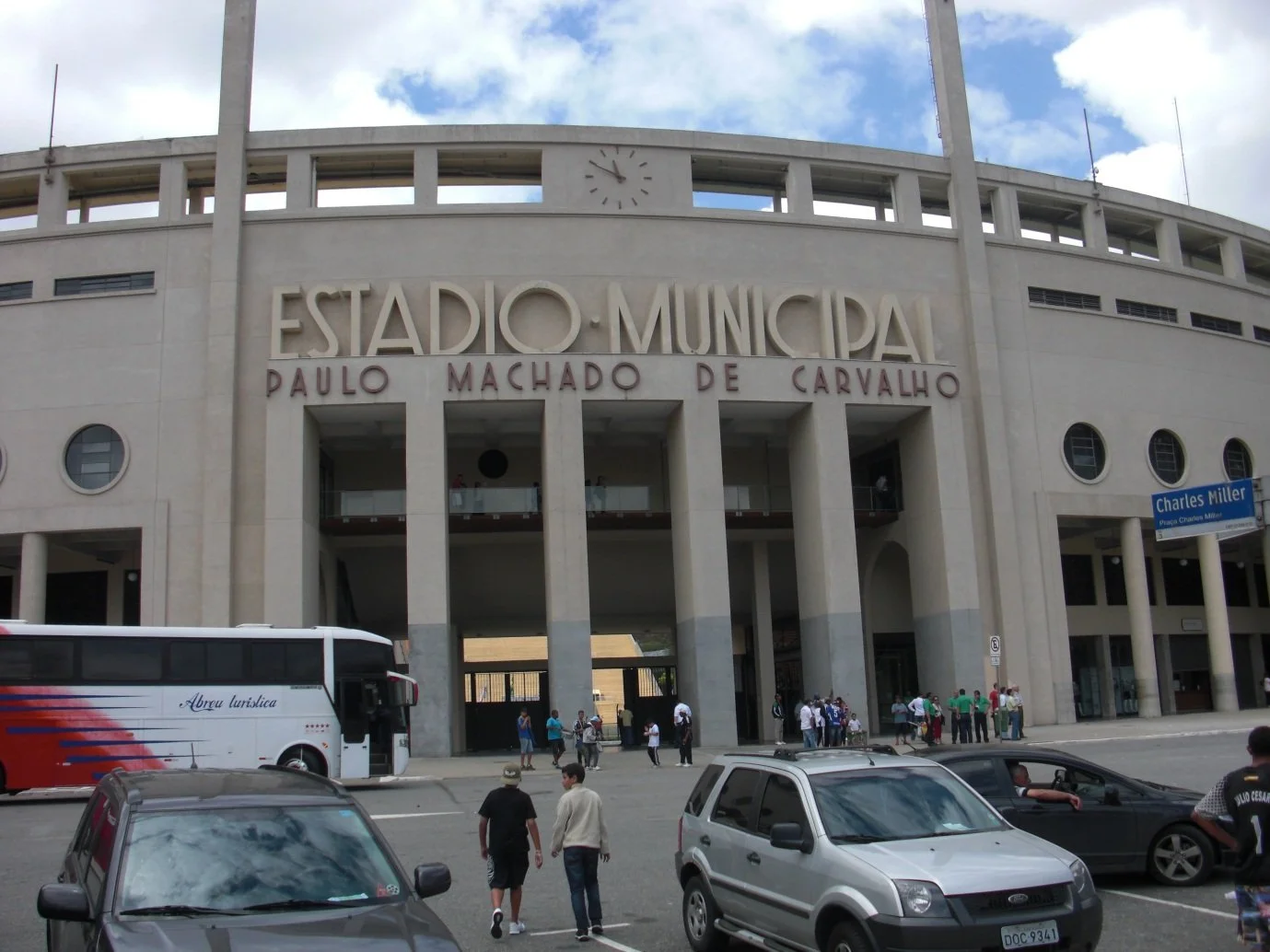
Estádio Municipal Paulo Machado de Carvalho (Image: Damien Wilkinson)
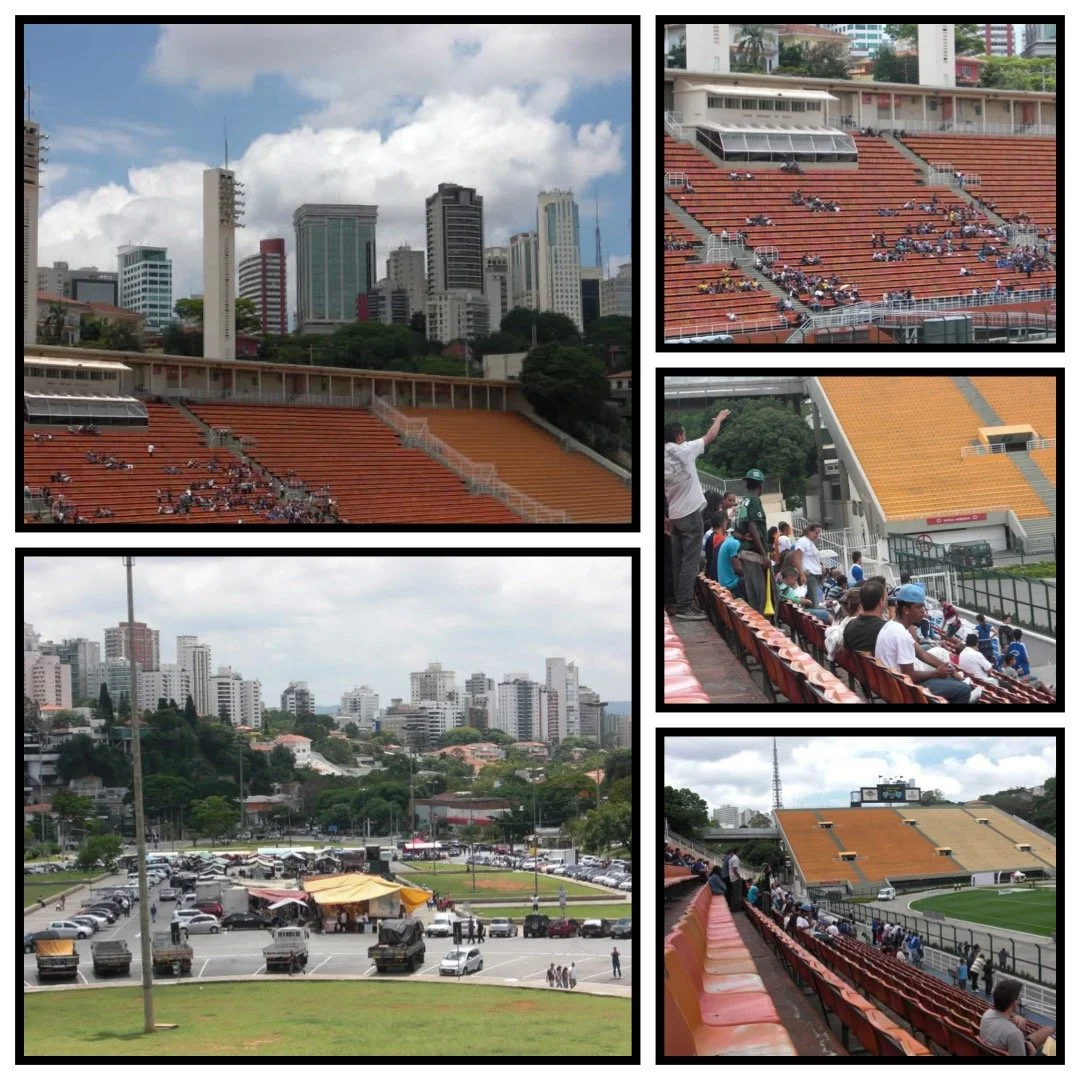
Opened by Pelé in 2008, the museum sits within a classic stadium. Opened in 1940, it features a retro running track around the pitch and an uncovered bowl that seats 40,000—though they managed to squeeze 72,000 into it during the good old days of 1942. The ground hosted World Cup matches in 1950. While its grandest football days are in the rearview mirror, it has lately hosted the Rolling Stones, Iron Maiden, and, somewhat incongruously, Avril Lavigne.
The Unexpected Welcome Party
As I approached the stadium, a massive commotion echoed from the gates. A crowd of fans was chanting, beating drums, and kicking up a storm. It felt like an unusually rowdy welcoming party for a museum.
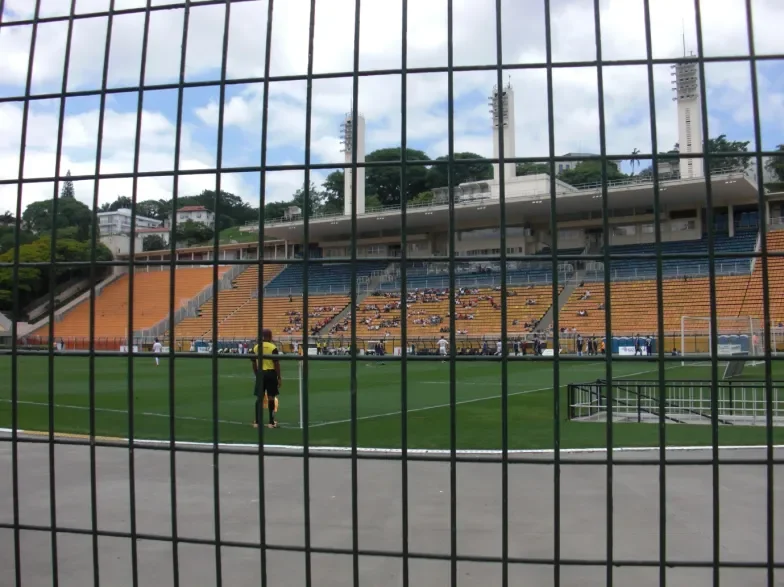
The fencing around the Estádio Municipal Paulo Machado de Carvalho (Image: Damien Wilkinson)
Intrigued, I wandered inside. A match was in full flow, played out in front of a few hundred fans scattered across the concrete stands. It turned out to be a youth tournament—an under-16 fixture played with the intensity of a cup final. I took a seat and watched.
For a low-key youth game, the passion on and off the pitch was staggering. The few hundred fans made an unbelievable racket. Total segregation was strictly enforced, with opposing factions occupying different sides of the ground, their drummers whipping up a rhythmic, hypnotic atmosphere. High fencing surrounded the entire playing area—a stark reminder from the locals that derby matches here can get incredibly "tasty."

Goooaaalll!! Estádio Municipal Paulo Machado de Carvalho (Image: Damien Wilkinson)
On the pitch, the raw technique was beautiful. The close control, the sharp twists, and the elegant turns were all there. Yet, there was a familiar lack of composure in front of goal. Both goals I witnessed were scrambled, close-range headers. Free kicks sailed wildly over the bar, lacking any of the Roberto Carlos flair we’ve grown accustomed to on television.
Naturally, the young players had already mastered the art of the theatrical dive. Every tackle was dramatised to win a free kick. The referee brandished yellow cards like confetti, clearly influenced by the rolling and wailing on the turf. But the goal celebrations were beautifully orchestrated. I sat there content, knowing the trailblazing spirit of Brazilian football was alive and well.
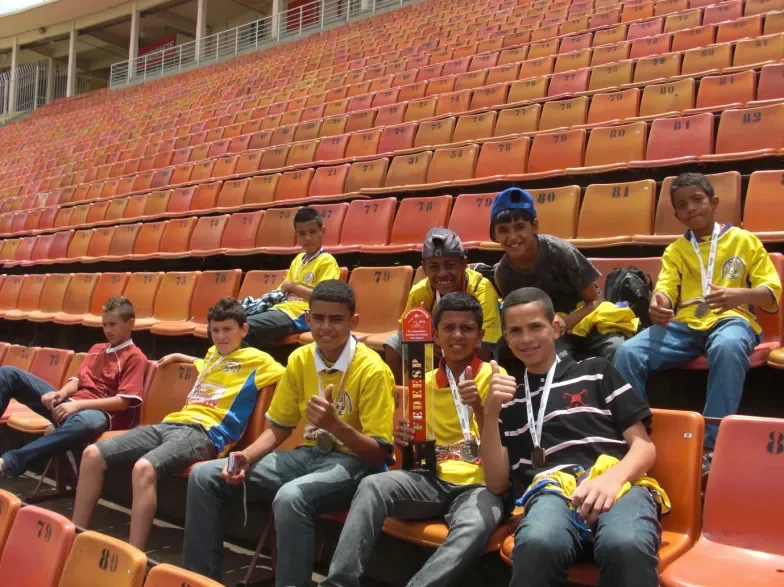
Some of the local lads - I wonder if any went on to make it professionally? (Image: Damien Wilkinson)
Inside the Cathedral of Futebol
Having whetted my appetite on the terraces, I headed into the museum. It didn't disappoint.
Even with the language barrier—most of the text is in Portuguese—it’s an incredibly immersive experience. The museum charts the history of the game in Brazil, tracing it back to Charles William Miller. Born in São Paulo to Scottish parentage, Miller flitted between England and Brazil, officially introducing the sport in 1894 equipped with two footballs and a copy of the Hampshire FA rulebook.

Artefacts from the Museum at the Estádio Municipal Paulo Machado de Carvalho (Image: Damien Wilkinson)
The historical heart of the museum details every World Cup since 1950. It follows what the locals call a national "rite of passage"—specifically the trauma of 1950, when the heartbeat of Brazil stopped after a devastating 2-1 defeat to Uruguay on home soil.
You enter a curtained-off room where videos of that defeat play on a loop, accompanied by the literal sound of a beating heart fading into total, crushing silence. The screens show grown men in tears in the stands. It rams the significance home. Clearly, the locals have never experienced a decade of slow decline through the lower leagues of English football, or the specific character-building misery of a wet Tuesday defeat at Accrington Stanley.

Early Predators?! Artefacts from the Museum at the Estádio Municipal Paulo Machado de Carvalho (Image: Damien Wilkinson)
The subsequent exhibits track the redemption arcs of later World Cups, blending football footage with major global news events of each era. There is, as you'd expect, a massive focus on the legendary 1970 team. Watching the vintage footage, you can’t help but feel a sense of awe, even if the pace of the game looks remarkably pedestrian compared to today's frantic, high-speed press.
The View from the Nike Shop
The deeper you go, the more interactive it gets. There’s a wall of sound featuring screens capturing the full, noisy spectrum of crowd emotions from tragedy to triumph. There are penalty simulators where virtual keepers try to stop your shots. I watched portly, 50-something Brazilian women dispatching penalties into the corner with absolute aplomb—a display that certainly would give our keepers back home a run for their money.
For about £2 admission, the museum is an absolute steal. It captures the unique, obsessive love affair this country has with the ball.
I didn’t encounter a single other English traveller during my visit, and my claret-and-amber Bradford City shirt drew some incredibly perplexed looks—especially in the high-end Nike gift shop, where modern jerseys were selling for eye-watering amounts. Still, it felt good to plant a little bit of West Yorkshire heritage in the middle of São Paulo.
It didn't quite compensate for missing the match at Valley Parade (a disappointing 1-0 reverse), but it offered something better: a window into the soul of how another corner of the world watches, feels, and breathes the game. If you ever find yourself at a loose end in São Paulo, skip the corporate lounges. Grab a ticket, walk through the gates, and listen to the drums.
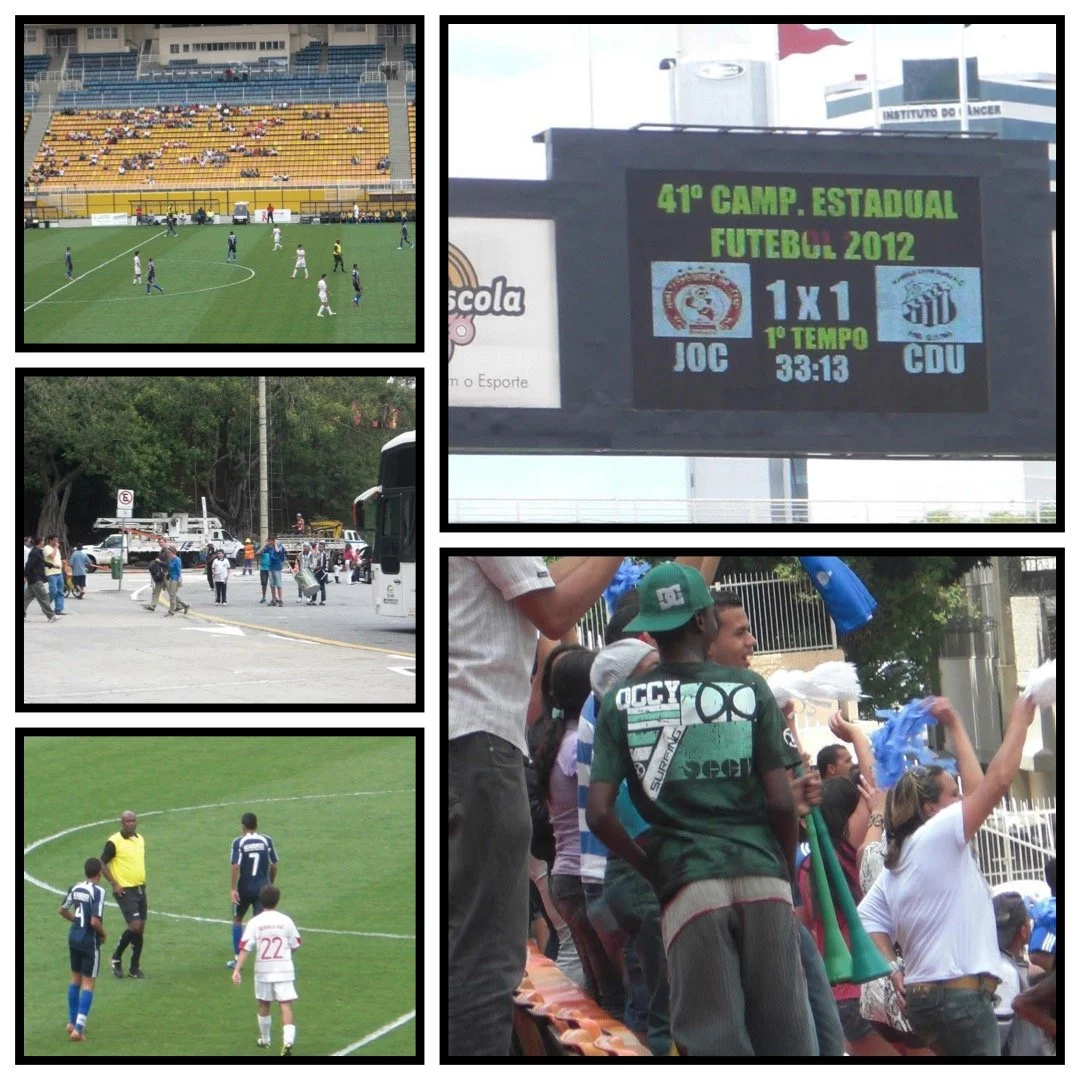
A few more photos from the visit (Images: Damien Wilkinson)