
CHASING THE NOISE: The Brave, Unruly Evolution of Chantel McGregor
There is an ironic beauty to discovering raw, untamed creative talent in a place like Saltaire. Sir Titus Salt’s textile mill model village was the ultimate first-act triumph: structured, predictable, and cast in stone.
Yet, tucked away inside Saltaire’s The Old Tramshed bar back in 2008, armed with a guitar rather than a loom, a 22-year-old Chantel McGregor was weaving a completely different pattern.

Chantel McGregor (Image: Howard Rankin)
She was young, but even on that small, cramped pub stage, her raw talent demanded your full attention. There was an engaging friction to her performance: fiery, ferocious guitar work twinned with a striking, heartfelt vocal, all stitched together with the kind of warm, self-deprecating Yorkshire banter that instantly wins over a room.
As a fellow Bradford native, I’ve kept tabs on her ever since. I’ve watched her graduate to much larger venues, but lately, I found myself looking back. How do you sustain a creative fire over 18 years in an industry that loves to force artists onto pre-defined tracks?
The Crucible of the Melborn Hotel
Chantel grew up on the southern outskirts of Bradford, in a suburb called Wyke. It was a house built on a foundation of classic rock. Her dad constantly cranked out Led Zeppelin, Fleetwood Mac, and Black Sabbath.
By the time she was three, she was already tinkering with her dad’s guitars, constantly detuning them. To buy himself some peace and quiet, he bought her a half-size acoustic of her own. It didn't work. It just made her louder.
Age 7: She started formal lessons.
Age 8: She became the youngest person in the country to pass a Rockschool grade.
Age 12: She began cutting her teeth at the weekly rock and blues jam sessions at Bradford’s famous Melborn Hotel.
The Melborn was her crucible. Surrounded by older, seasoned musicians, she didn't just learn how to play; she learned how to handle a room. She gained a blues rock education that can’t be taught in a classroom—the smoke and sweat of a grassroots venue honing her craft.
The Illogical Starting Point
When school finished, in true Blues myth-establishing fashion, Chantel stood at a crossroads. There was a safe path on the table: a respectable English degree. It was predictable. It made sense on paper.
Instead, without selling her soul, she chose the music
She opted for Leeds Conservatoire (then the Leeds College of Music), studying Popular Music while purposefully keeping her roots in the North so she could keep gigging. She graduated with a First Class Honours degree in 2009. But the real education was happening on nights like the one I witnessed in 2008—building a band and a reputation while establishing her own rules.

Chantel McGregor (Image: Steve Howdle)
Refusing to Stay on the Tramlines
Her debut album, Like No Other (2011), blew the doors wide open. It established what would become her signature duality: lightning-fast, ferocious blues guitar contrasted with haunting, ethereal vocals. The industry took notice, crowning her "Guitarist of the Year" and "Female Vocalist of the Year" at the British Blues Awards between 2012 and 2014.
Follow-up, Lose Control (2015), saw her step away from pure blues and lean heavily into a Southern Gothic infused rock sound, channelling heavy Sabbath riffs alongside an intimate, acoustic-tinged energy.
Fast forward to her record, The Healing (2025), and she has fully shed the wool from her back. It is a dark, progressive masterpiece. Influenced by the wayward, inventive arrangements of Steven Wilson, and beautifully produced and recorded by Oli Brown and Wayne Proctor of The Dead Collective, Chantel refused to stay on the tramlines and evolved her sound entirely.
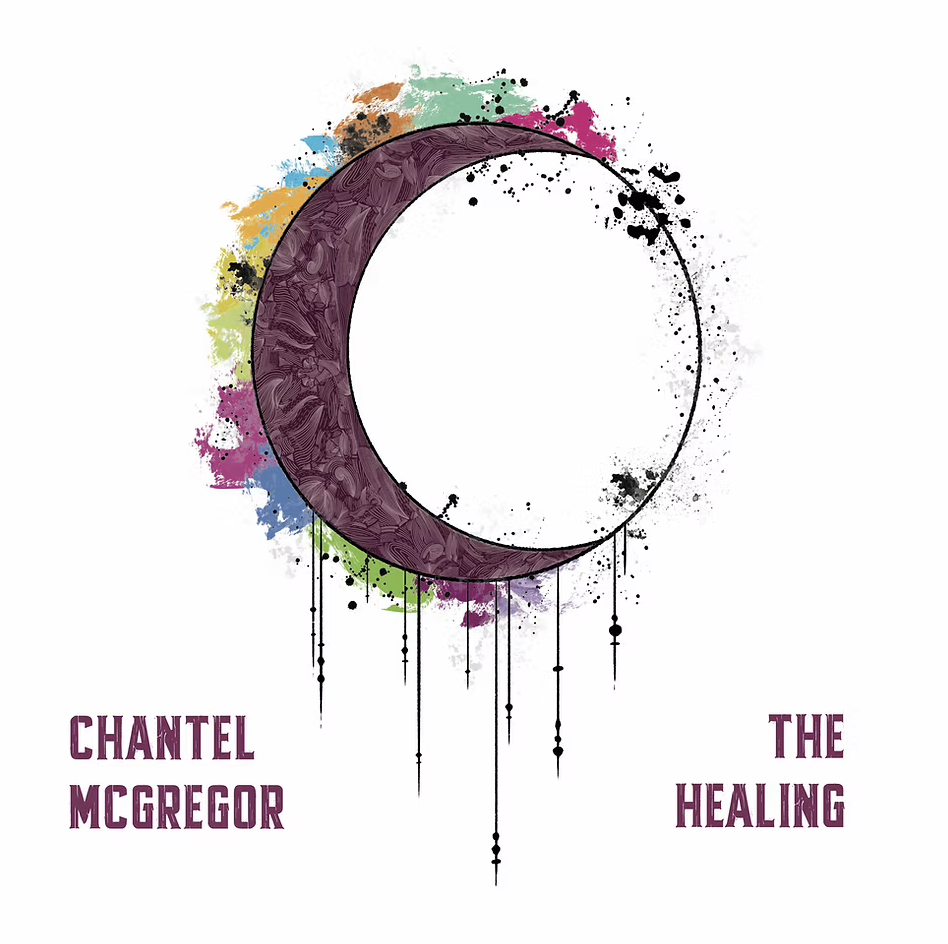
The Healing album cover (Image: www.chantelmcgregor.com)
Northern Grit & The Glamourless Grind
When the world shut down in 2020 and live music vanished in a puff of dry ice, the sudden stop could have broken her. Instead, she embraced with the hand she’d been dealt, establishing the Shed Sessions—livestreamed gigs broadcast directly from her shed, which later became a pair of raw, intimate live albums. It was classic Northern grit: stripping things back until it was just a woman, a guitar, and a fierce refusal to stop playing.
Today, the musical landscape is tough. Digital streaming pays fractions of a penny. Travelling up and down the motorway is costly and soul-destroying. Small, independent venues and pubs are disappearing. To survive as an independent artist today, you have to be more than a musician; you have to be the entire factory.
Supported by her family—her parents are still heavily involved in her touring and recording—Chantel has taken full control of her destiny. She handles the touring routes, manages the chaotic world of social media, writes the press releases, and runs her own independent record label.

Chantel McGregor (Image: Steve Howdle)
It’s this unglamorous, behind-the-scenes graft that often goes unnoticed. But it’s the very oxygen that keeps grassroots music alive. Chantel McGregor’s 18-year journey isn't just a testament to musical talent; it’s a masterclass in creative independence, resilience, and the sheer joy of making a hell of a lot of noise on your own terms.
For a Bradford lass, I tip my hat to that.
