
WAYFARING GEAR: To Have And To Hold
Following my recent look back at my camera journey, I promised to shine a light on the final stretch—specifically the unexpected detour that led me to the Fujifilm X-T30 III by way of a brief, intense fling with the Ricoh GR III.
Waiting at the Altar
The Ricoh GR3 III made a lot of sense on paper.
A premium quality and very well-regarded proposition with a form factor geared to travel – 257g and a footprint that meant it can be thrown in a jacket pocket, whilst still packing 24MP through its fixed 18.3mm f/2.8 lens.
I read many reviews and viewed one in a camera shop before making the final decision – plumping for the Street Edition variant and finding a well-priced ‘open box, but unused’ example.
The Blind Date
The Ricoh quickly arrived, was in exactly the condition described, and I got to work on getting to know it.
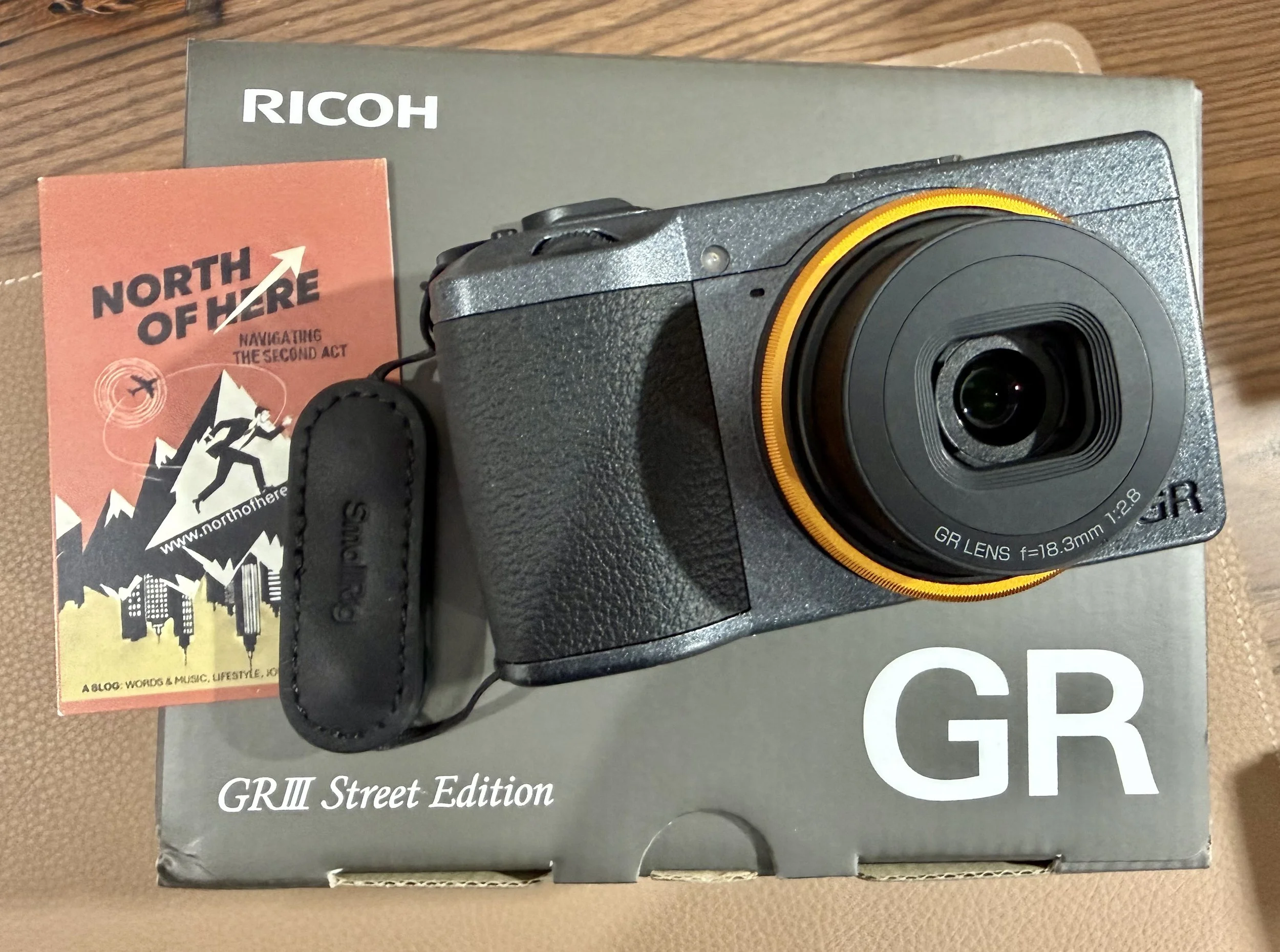
Ricoh GR III Street Edition (Image: Damien Wilkinson)
Initial impressions were good, if not a bit overwhelming with the navigation through the set-up options and screens a little confusing for a Ricoh first-timer.
“The initial setup felt less like a first date and more like trying to decipher a cryptic text message.”
I was keen to add some of the famous Ricoh recipes to the shooting options, and whilst a bit long winded to set up, eventually got a few installed.
Having taken a few basic photographs, whilst I was fairly impressed with the output and quality, I did have a small doubt that something wasn’t quite there for me. This was further compounded by taking the camera on a trip to London – the images just weren’t happening for me and also, I wasn’t finding the shooting experience particularly engaging.
Which brings me nicely to the form factor and aesthetics of the Ricoh.
Whilst it’s incredibly light and portable, I just didn’t get the same enjoyment from lifting it up and shooting compared to my previous experience with the Fuji X series cameras.
It’s not the prettiest camera – almost resembling something that you might dive down to the bottom of the pool to retrieve on a survival swimming lesson – and, whilst I appreciate this shouldn’t detract from any technicalities, it did have some impact on my experience. I wanted to love the camera, but didn’t get beyond a mild ‘like’ and pretty much ‘friend-zoned’ it.
The absence of being able to easily apply a filter to the lens (I know this is possible with a lens hood), stories of issues with dust entering the sensors, less tactile buttons and dials and a basic rear screen didn’t help establish any love chemistry either.
It Isn’t You It’s Me…
So, I took perhaps quite a swift decision to divert my journey, change the co-ordinates somewhat, and rekindle my Fuji X-Series romance. This about-turn was coupled with a more significant decision to move into the world of inter-changeable lenses, something I had previously resisted.
Accordingly, I put the Ricoh to one side (thinking I may still keep it) and went back to researching the array of new options now within my expanded focal length.
I knew I still wanted a relatively compact camera body, was keen on the Fujifilm simulations, loved the vibe and personality of the Fuji X cameras, and valued the options of having the availability of lenses in relatively small formats to avoid lugging around significant items of kit or ginormous zoom lenses.
Having danced around the camera bags between new and used models, I decided to bite the bullet and go for a new model, with the associated modern technology, rather than run the risks from a second-hand purchase on eBay, and potentially another re-purchase before long.
The Old Flame
My on-line dating process led to me being matched with a Fujifilm X-T30 III, which has some lineage to my previous X-100F and X-70 cameras, and seemed perfect for travel and street photography.
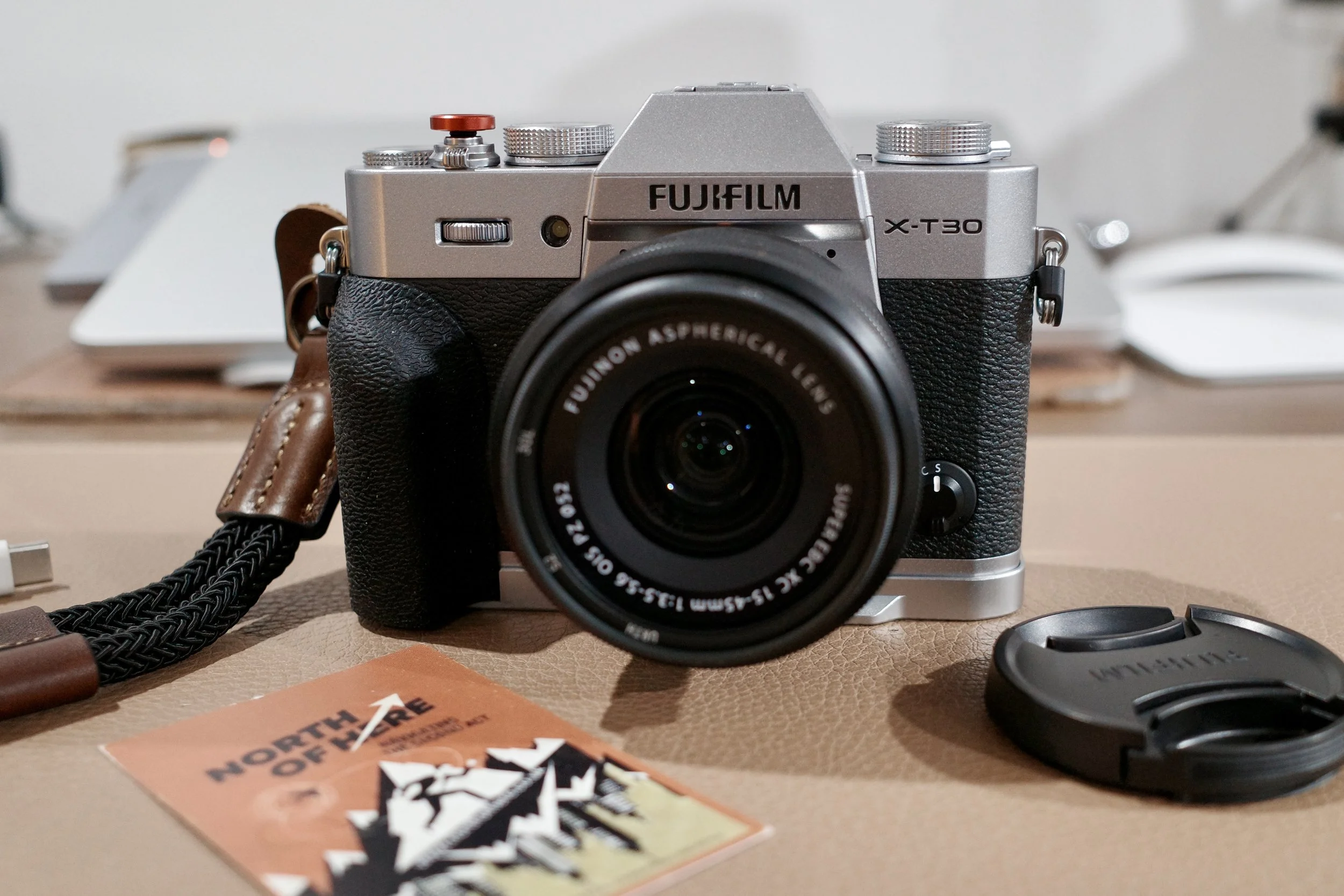
The Fujifilm X-T30 III (Image: Damien Wilkinson)
It’s packed full of the latest technology – 26.1MP, AI powered auto focus, EVF and a dedicated Film Simulation dial, providing instant, tactile access to Fujifilm's famous colour profiles, including the new REALA ACE and Nostalgic Neg. Oh, and it has a back-side illuminated X-Trans CMOS 4 sensor and X-Processor 5 imaging engine, which sounds mightily impressive, whatever it actually means!
Having landed a solid deal with Jessops (who do offer great customer experience) — including two kit zooms (15-45mm and 50-230mm) — I was smitten the moment I unboxed it.
To me, the camera was on a different level to the Ricoh.
The X-T30 III effectively takes the sophisticated brains of Fujifilm’s professional line and squeezes them into a compact, retro-styled body. It’s the 'Little Giant' that actually looks the part. With its chrome finish and tactile dials, it felt less like a tool and more like an invitation. Unlike the Ricoh—which I felt I should like—the Fuji was a camera I actually wanted to hold!
And still reasonably portable (378g without lens) – OK, it isn’t going to easily fit in the same spaces as the Ricoh, but add a sling bag, and this has massively unlocked and aligned its capabilities to my requirements.
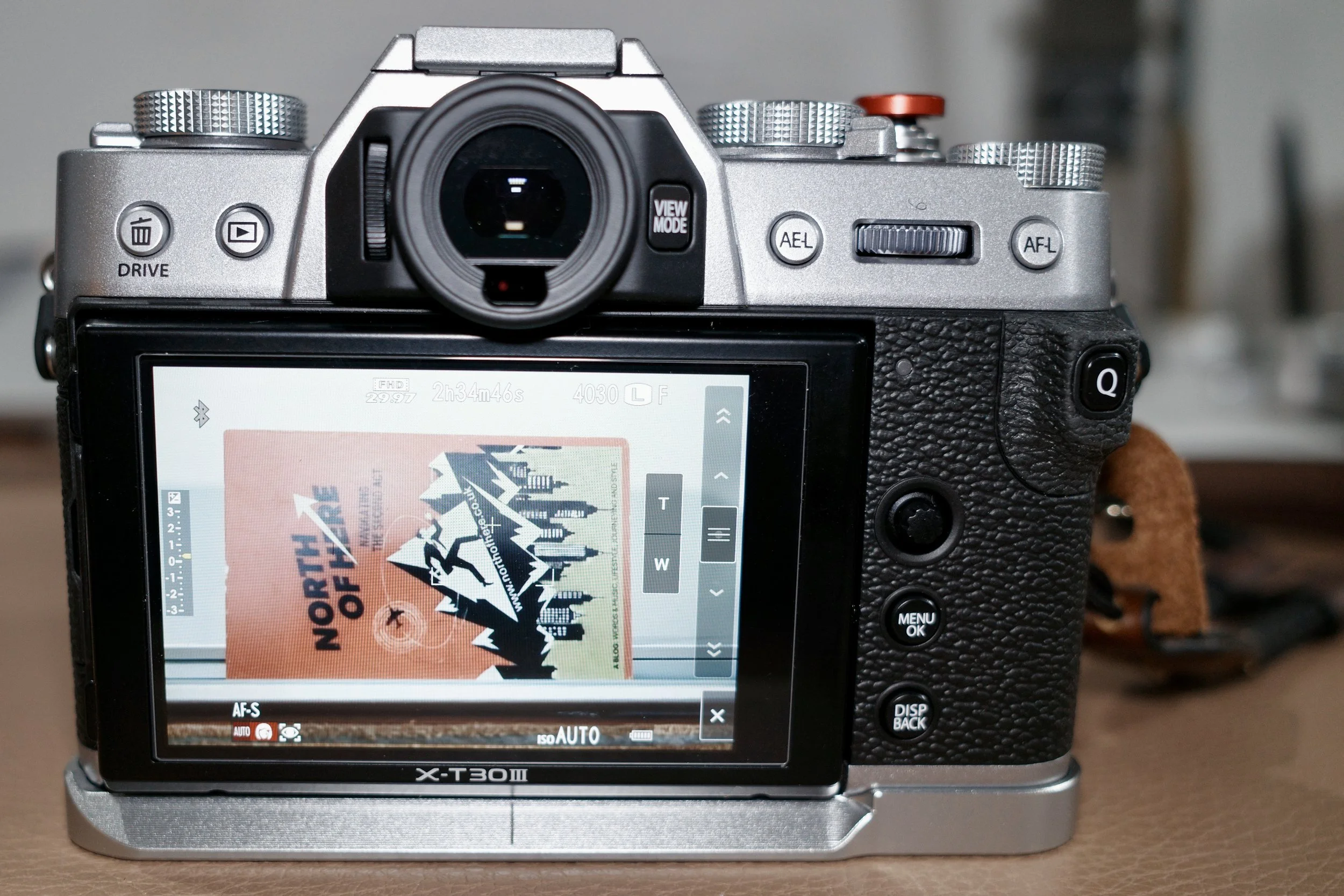
The Fujifilm X-T30 III (Image: Damien Wilkinson)
“I Do”
On the basis of going all in, I’ve consummated things expanding the set-up to include some prime lenses (XF50mm f2, XF27mm f2.8 and XF18mm f2), further zooms (XF70mm-300mm f4-5.6, XF18mm-55mm f3.5-4.8, XF10mm-24mm f4) and have also added the almost obligatory additions of filters (Urth Plus+ UV, CPL), hand-grips, tripods (table/full), lens wraps and a myriad of neoprene pouches all capably held in a Bellroy Venture sling.
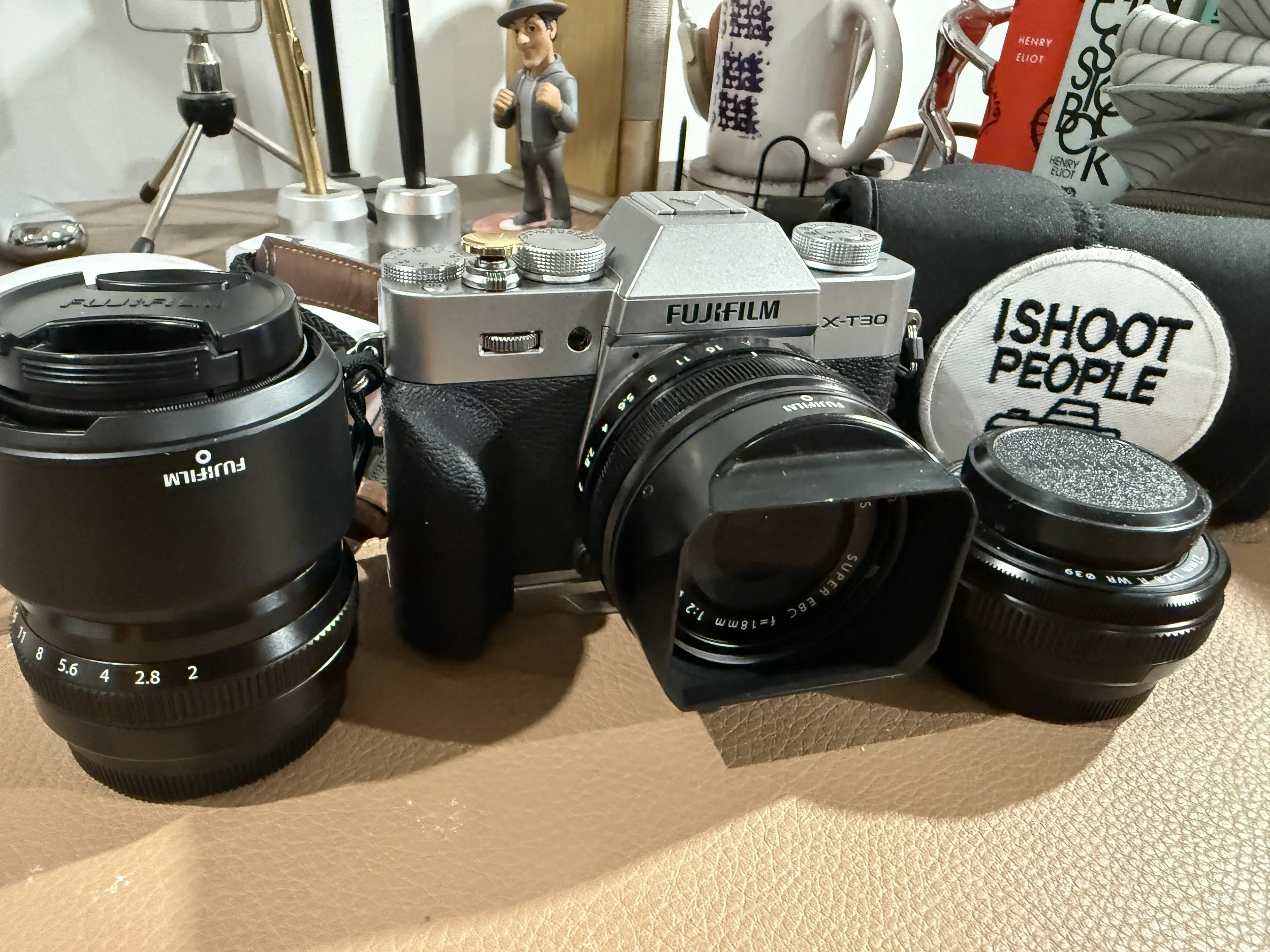
XF50mm, XF18mm (on camera), XF27mm (Image: Damien Wilkinson)
From This Day Forward
So, I’m now hitched and can’t wait to harness the camera in documenting my North of Here journey.
Initial results have been really pleasing – I’m still getting to grips with a lot of the features of this complex and powerful camera, but I’m already loving the images it creates.
The film simulations are especially impressive, easy to flick between with the dedicated dial, and produce wonderfully vibrant and compelling images.
Lens-wise I’m getting into the groove of which models to accompany me, but I’m pleased with their performance and handling - all provide sharp images whilst being portable in the sling bag.
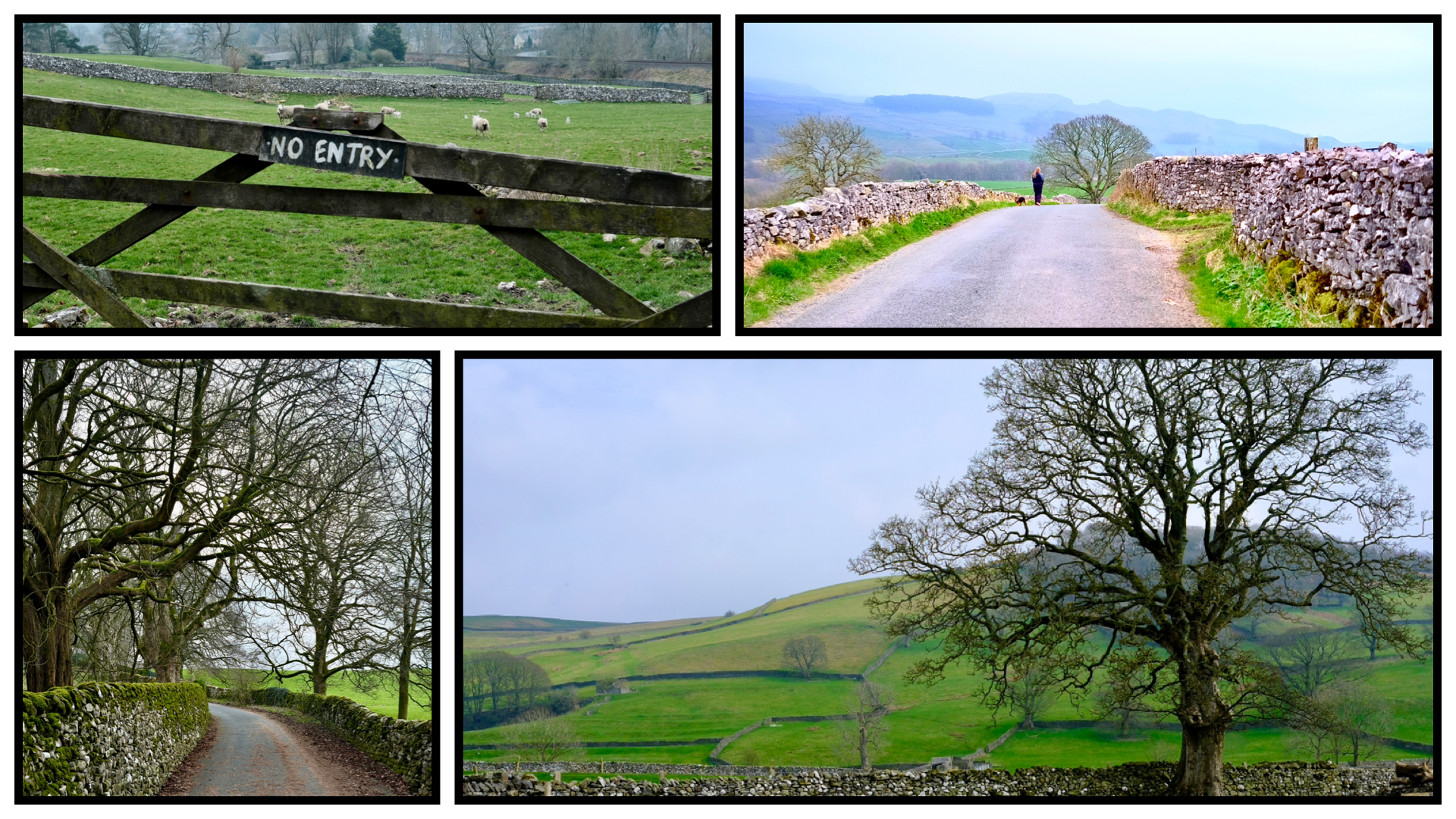
Around the Yorkshire Dales (Image: Damien Wilkinson)
It’s worth noting that Fuji seemingly provide great customer service and support.
If you sign up to the Fuji X/GFX website and register the camera (and accessories) there’s a wealth of guidance and help available.
For example, there are great weekly guidance and tips emails for new users (beginner or intermediate) in addition to regular in-person courses (£99 for 6 hours of tuition in London, Birmingham or Glasgow) which look excellent and I will definitely be taking advantage of soon.
In addition, the subscriber Fujilove website (Monthly magazine, Gear Talk, Lens Guides, PDF Handouts and Live Webinars) offers a great inroad to the worldwide Fuji community.
Hopefully all of this will help me unlock the full capabilities of the X-T30 III and create a match made in heaven…
Postscript:
The Ricoh ‘divorce’ completed recently – I managed to recoup most of my outlay whilst letting the GR III down gently (there’s “plenty more fish in the sea” etc). In retrospect I probably never gave the relationship enough time.
