
REAL LOVE: The Beatles Childhood Memories Private Tour
On the eve of Liverpool’s Beatles International Week 2026, which runs from 26th August to 1st September, I was privileged to join a private tour run by Strawberry Field to visit a number of The Beatles childhood places.
Strawberry Field
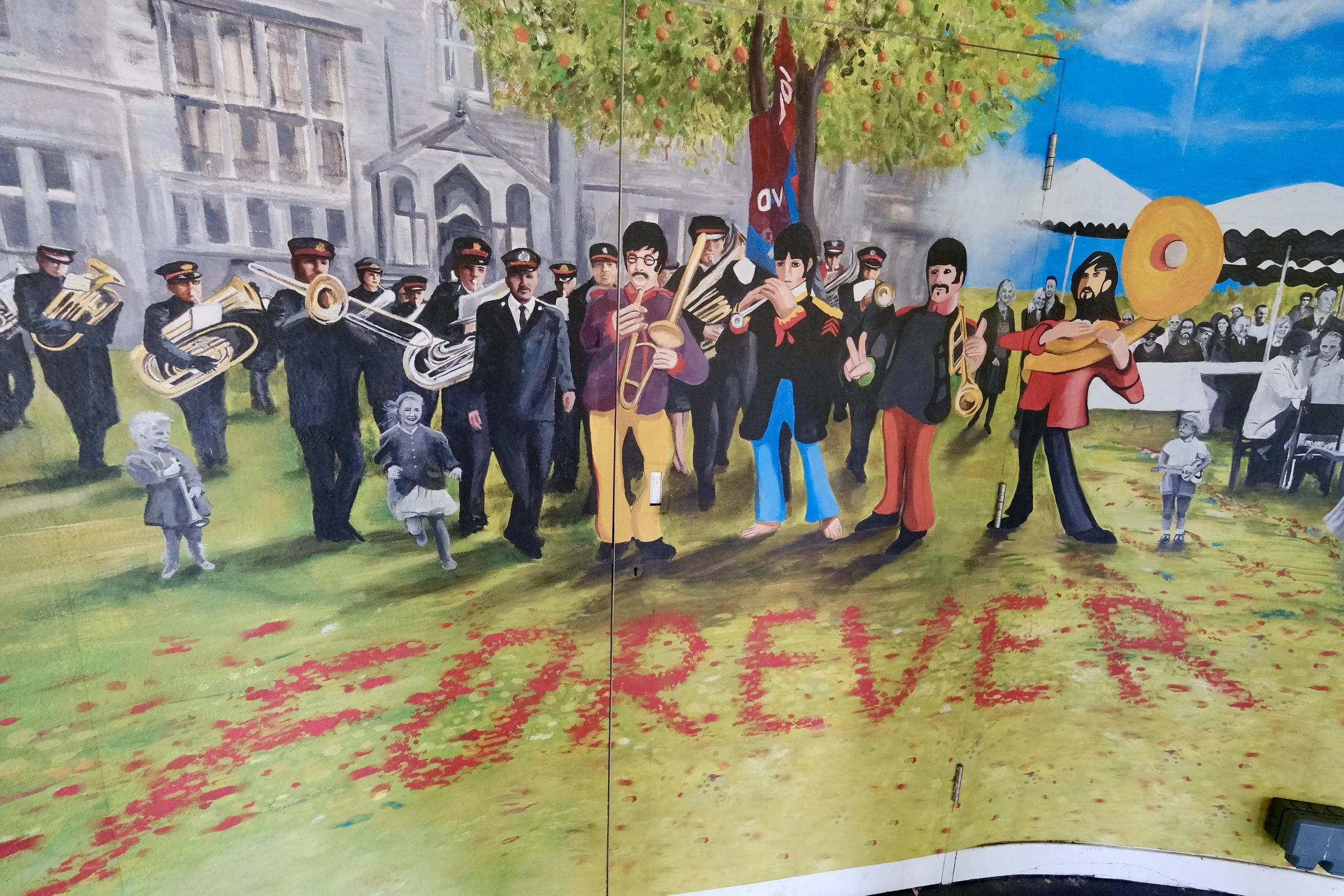
Part of the bandstand mural at Strawberry Field (Image: Damien Wilkinson)
Situated on Beaconsfield Road (Liverpool L25 6EJ), about 6 miles or so from the city centre, is the Liverpool landmark immortalised in the song “Strawberry Fields Forever”.
With its iconic red gates, Strawberry field once housed a Victorian Gothic mansion built around 1870 for a wealthy shipping merchant. In 1934, the property was purchased by The Salvation Army to be operated as a home for vulnerable children.
Whilst the original mansion was demolished in the 1970s, it was replaced with a purpose-built, modern facility for the children's home, which carried on until closure in 2005.
Despite its closure, the famous red entrance gates on Beaconsfield Road remained a major pilgrimage site for Beatles fans worldwide.
In September 2019, The Salvation Army officially reopened Strawberry Field as an award-winning visitor attraction and community hub. Today, the site features:
An interactive visitor exhibition dedicated to the site's heritage, Lennon's early life, and the writing of the song.
The peaceful garden grounds open to the public.
Steps to Work, a training hub empowering young people with learning difficulties and other barriers to employment.
The Beatles connection
As a child in the 1940s and 1950s, John Lennon lived nearby on Menlove Avenue with his Aunt Mimi. Using the expansive, wooded grounds of Strawberry Field as a personal refuge, Lennon would spend time hopping the perimeter fence to play hide-and-seek and climb trees, also attending some of the Salvation Army Summer garden parties in the grounds.
These nostalgic childhood memories inspired him to write the landmark Beatles track "Strawberry Fields Forever"(recorded in 1966 and released in 1967).
The Childhood Memories Tour
To help raise funds for the centre, private tours are run from time to time by Strawberry Field.
The Childhood Memories tour was set up to allow Beatles fans the opportunity to explore the places where the Fab Four grew up, highlighting the influences that shine through into their subsequent songwriting and lives.
Charlotte Martin
Charlotte (‘Charlie’) Martin, owner of Livertours, is a Green Badge tour guide, with an extensive knowledge of The Beatles, having achieved a Masters Degree in The Beatles, and with a wealth of touring experience was a perfect host for the Childhood Memories tour.
Let Me Take You Down…
With a minibus to transport the seven lucky tour participants we had a busy time embarking upon a tour of some of the South Liverpool postcodes made famous by The Beatles.
It was a fabulous day, Charlie shared some wonderful stories, facts and memories across the whole of the day accompanied by a great set of Beatles fans making the pilgrimage.
To set some context, Charlie highlighted that interest in The Beatles goes from strength-to-strength in Liverpool - the forthcoming International Beatles Week will spike visitor numbers dramatically.
Incredibly, some sixty years after the heyday of the group, The Beatles tourism has created around 3,500 associated jobs within the city and draws in a mouth-watering £140m of revenue per annum.
It is expected this will grow significantly as the forthcoming Sam Mendes biopic reaches fruition, and Beatlemania continues to find new fans whilst re-igniting interest from older fans.
Some of the highlights of the tour were as follows.
Stop 1: Quarry Bank High School
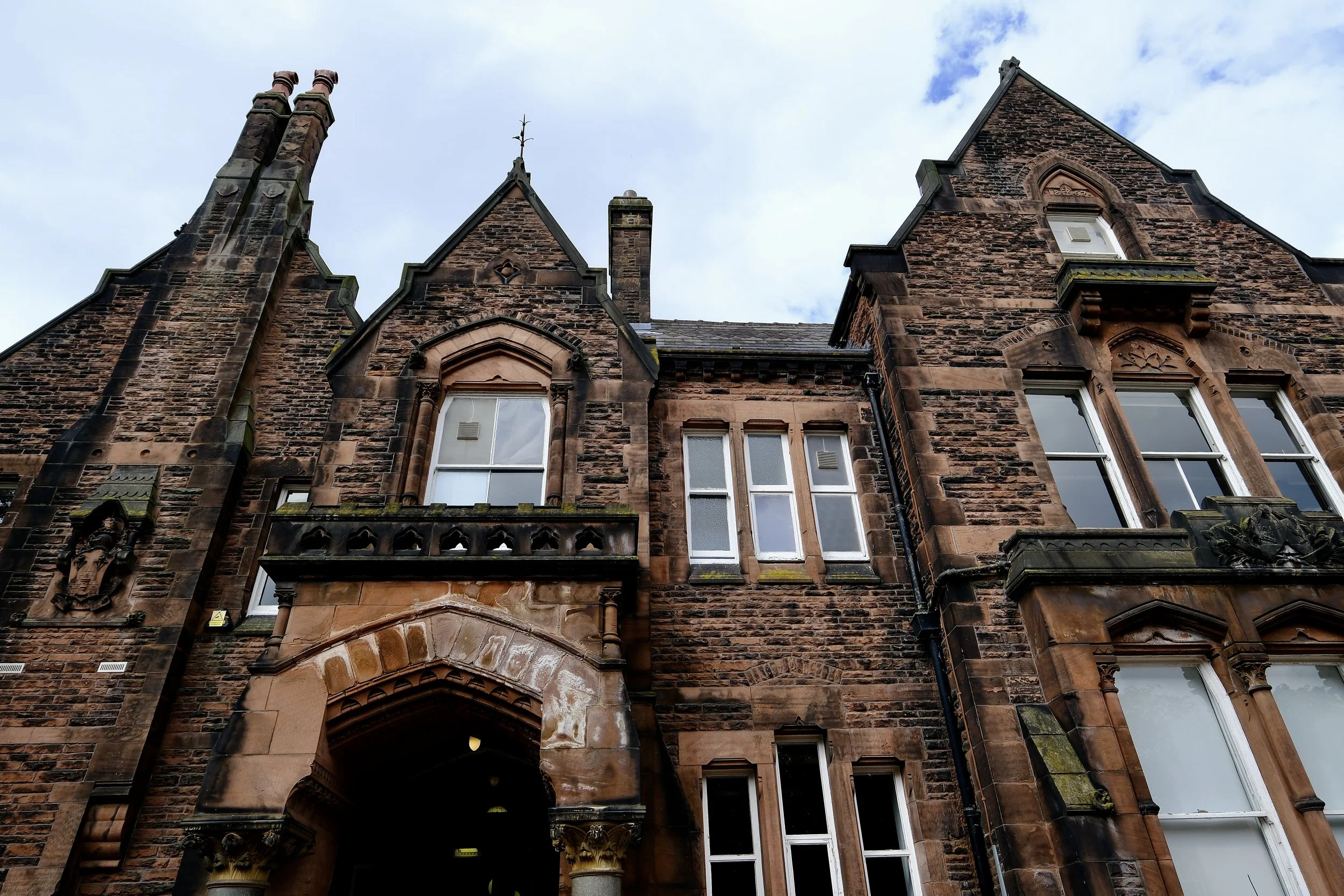
Quarry Bank High School (now renamed Calderstones School) (Image: Damien Wilkinson)
Quarry Bank High School (now known as Calderstones School) was the first stop-off for the tour.
John Lennon School Tour
This part of the tour was hosted by Leigh Bevan, based at Calderstone school, and and part of a newly formed “John Lennon School Tour” group, which has started to operate tours of the school this year to publicise this important part of John’s life.
To underpin this, a lot of research has been carried out by the team, including interviewing as many of Lennon’s cohort as possible and other relevant historians. A nice touch to ensure the authenticity of the various stories provided.
John Lennon attended the school from 1952 to 1957, and despite his problematic childhood, rebellious conflicts with authority, and documented school behavioural problems, it is generally felt that he looked back fondly on his time at the school, which probably provided at least some structure to his life at that time.
With a good deal of the buildings, fixtures and fittings from Lennon’s time still in existence, the tour of the schools was an utterly absorbing glimpse into life over seventy years ago.
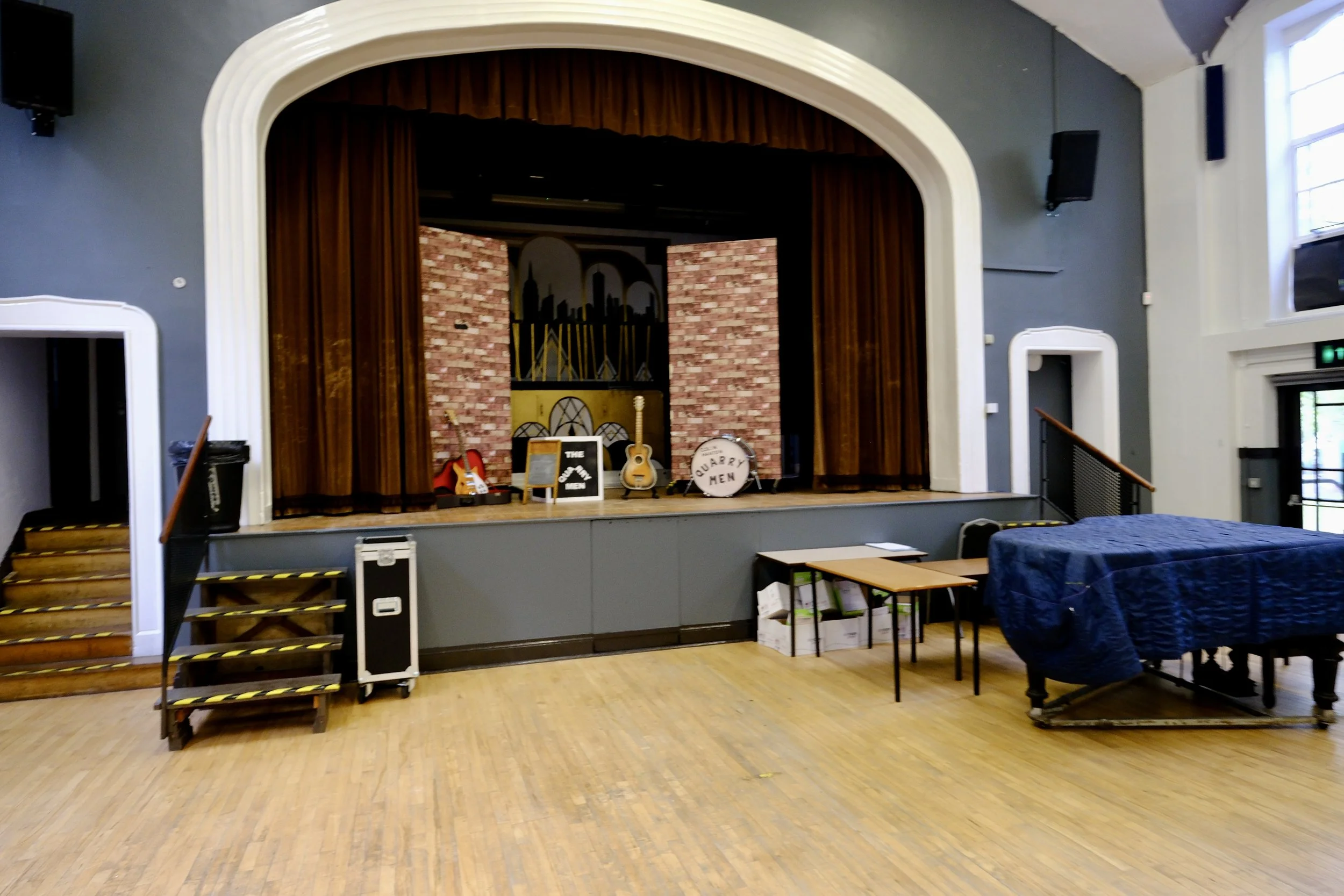
The Quarry Bank School Hall and stage (Image: Damien Wilkinson)
It was a spine-tingling experience to stand in the school hall where the Quarrymen performed, sit in the very balcony seats where he would sit at the back and fire off heckles at fellow pupils, and also visit the main school building where he would perch outside the head master’s office with friend Pete Shotton, awaiting their latest punishment.
Despite this, headmaster William "Bill" Pobjoy, did help Lennon get into the Liverpool College of Art despite his poor grades. Pobjoy also was instrumental in the removal of corporal punishment, heavily influenced by his experience that it acted as no deterrent for Lennon.
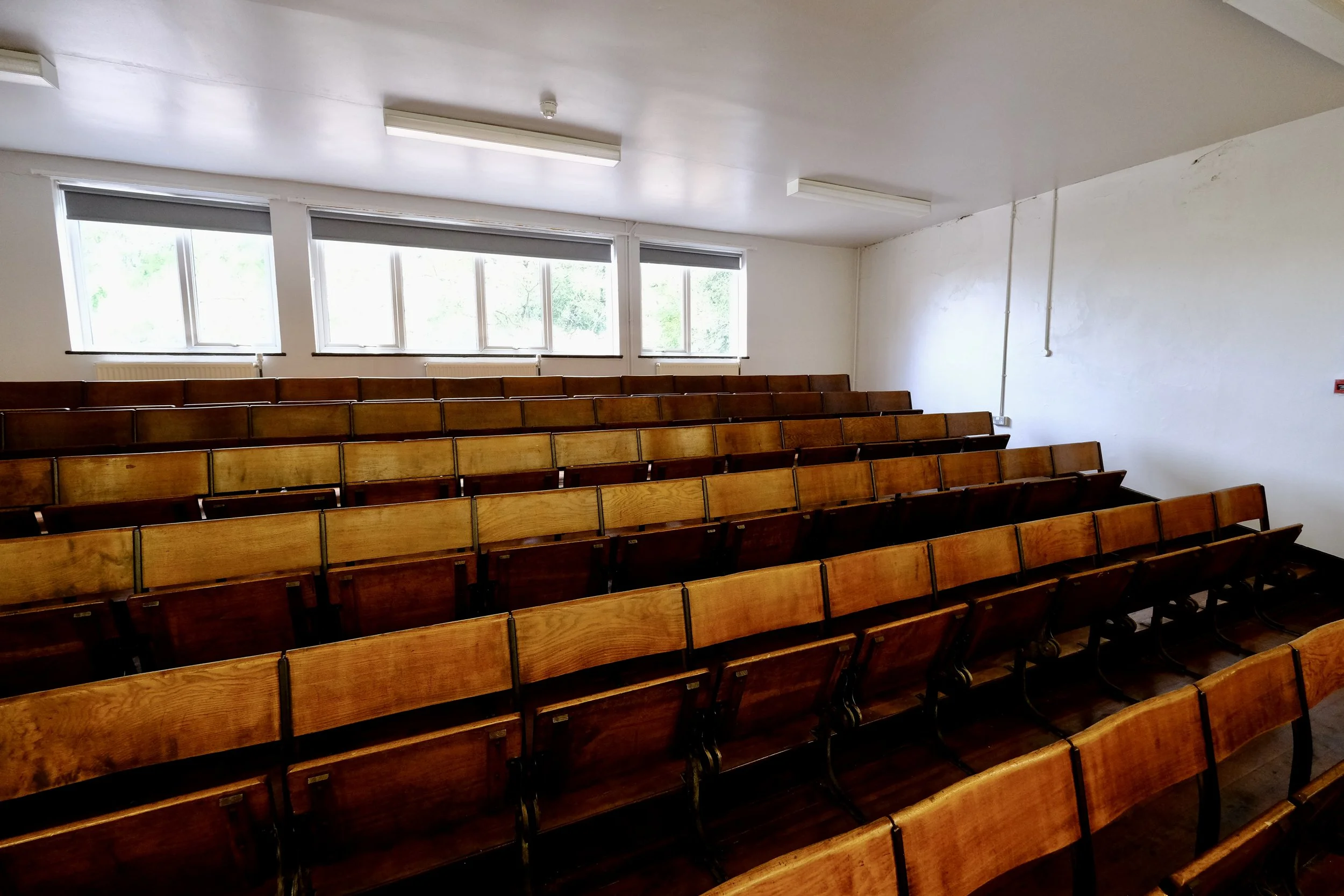
The Quarry Bank School Hall balcony (Image: Damien Wilkinson)
During the tour we were shown plenty of Lennon related artefacts—a trophy he helped the swimming team win, the school newsletter he contributed artwork and poetry to, a school revision book inscribed with his name and ‘workings’ amongst other things. Sadly, a number of school bulletins and other documents such as school reports have succumbed to theft, but is hoped that over time further documents can be found and included.
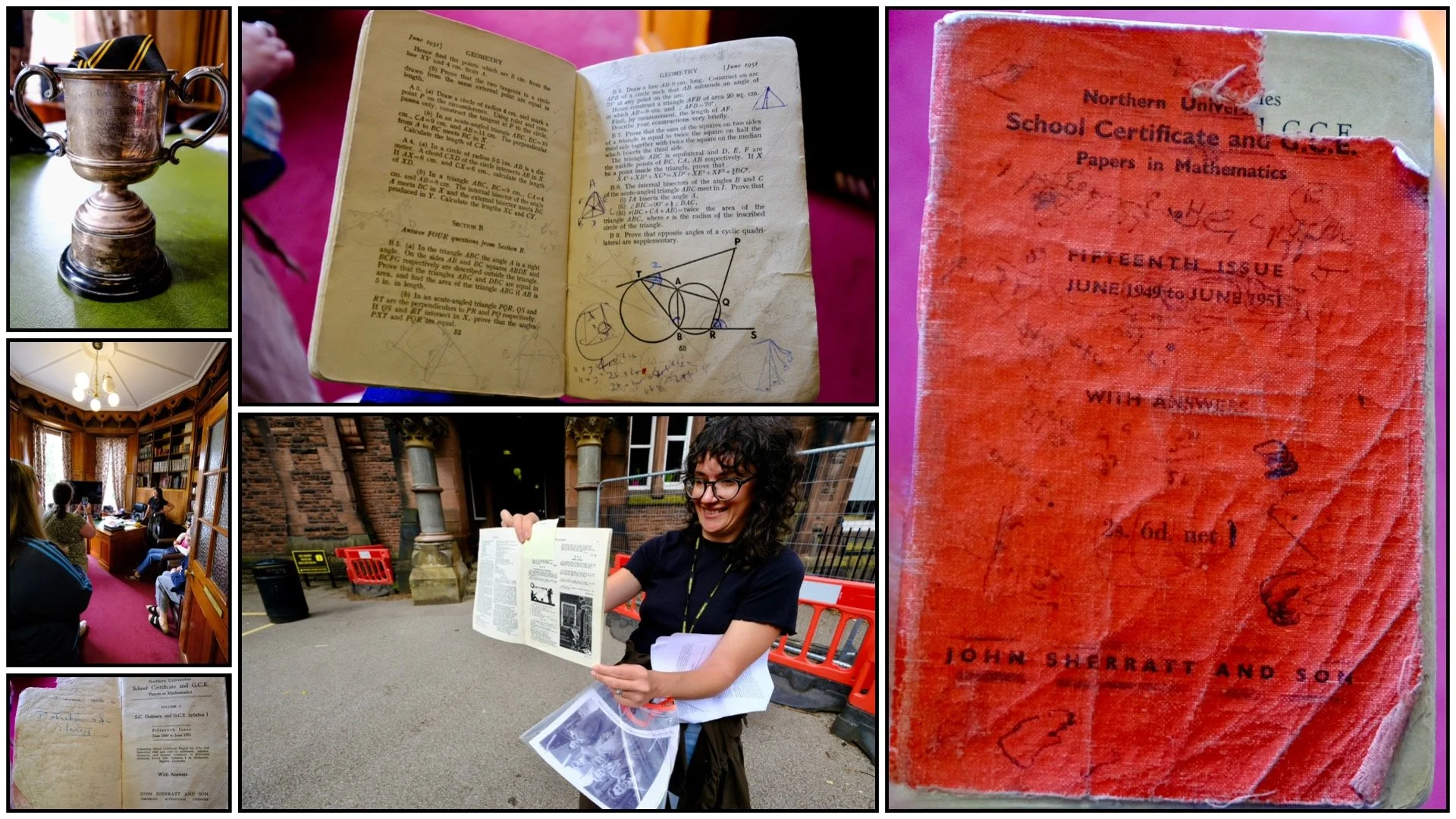
The swimming trophy, the revision book, the drawing in the school newsletter, the headmaster’s office (Images: Damien Wilkinson)
We were accompanied on this leg of our tour by a number of ex-pupils from Calderstones School, who were able to add their memories of studying there, which added some extra insights into life at the school.
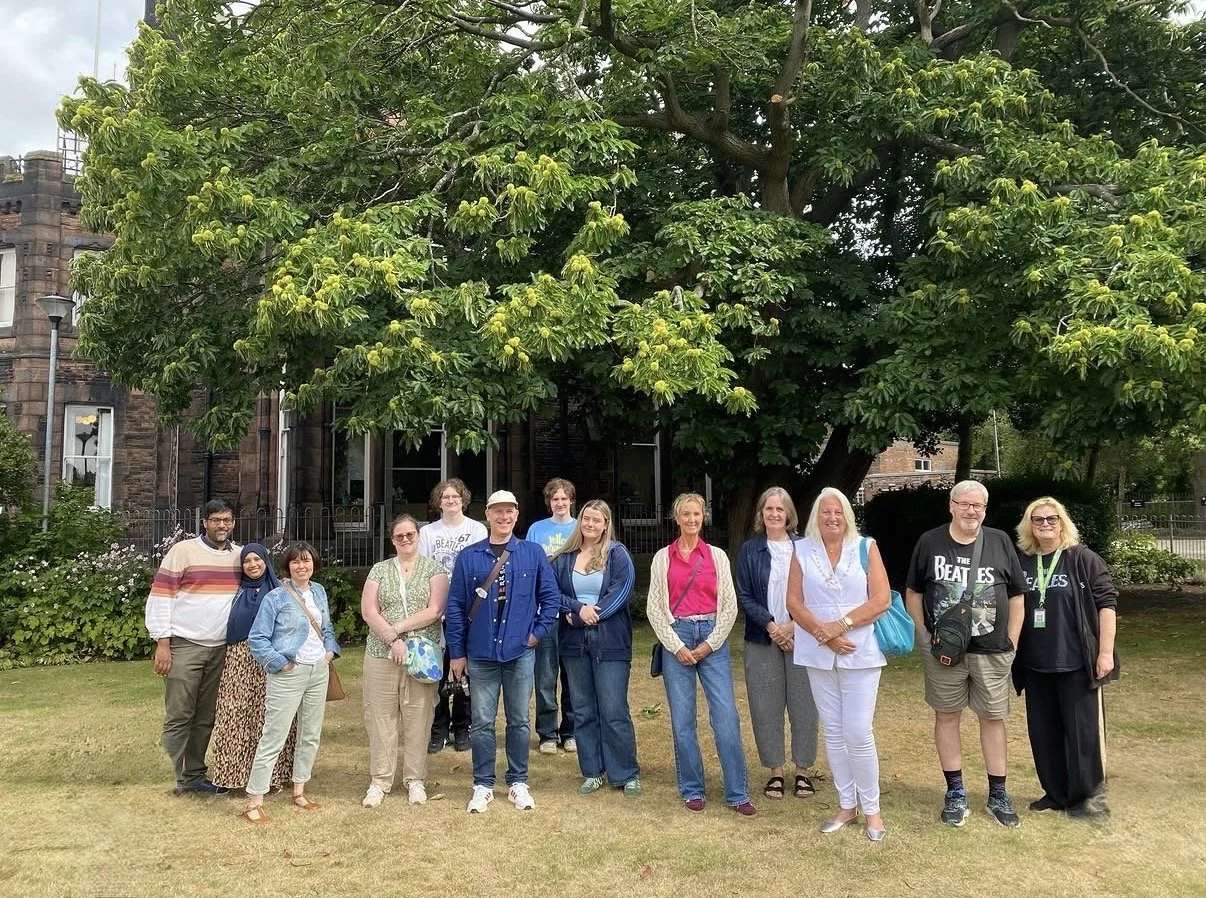
The Touring Group at Quarry Bank (Image: c/o Leigh Bevan @JohnLennonTour)
The school alumni also includes John Power (Cast), producer and musician Guy Chambers (Robbie Williams, The Lemon Trees), footballers Steve Coppell and Joe Royle, comedian Les Dennis and Jo and Kush, winners of the BBC hit series Race Across the World.
The overall tour was a fabulous start of our day, Leigh was a very knowledgeable and engaging host, and it was a great way to discover more about what was an important part of Lennon’s life.
Fully booked for 2026, it is expected that more tours will take place next year, so keep an eye out on Instagram (@johnlennontour) or the Calderstones School website for future announcements of availability for this amazing experience.
Stop 2: Sefton Park
Jumping back on the minibus we headed over the Sefton Park for a couple of key locations.
Firstly, Sefton Park lake where John’s parents, Alf and Julia first began dating and secondly, nearby 37 Aigburth Drive, where Stuart Sutcliffe, the first bassist and ‘fifth Beatle’ lived.
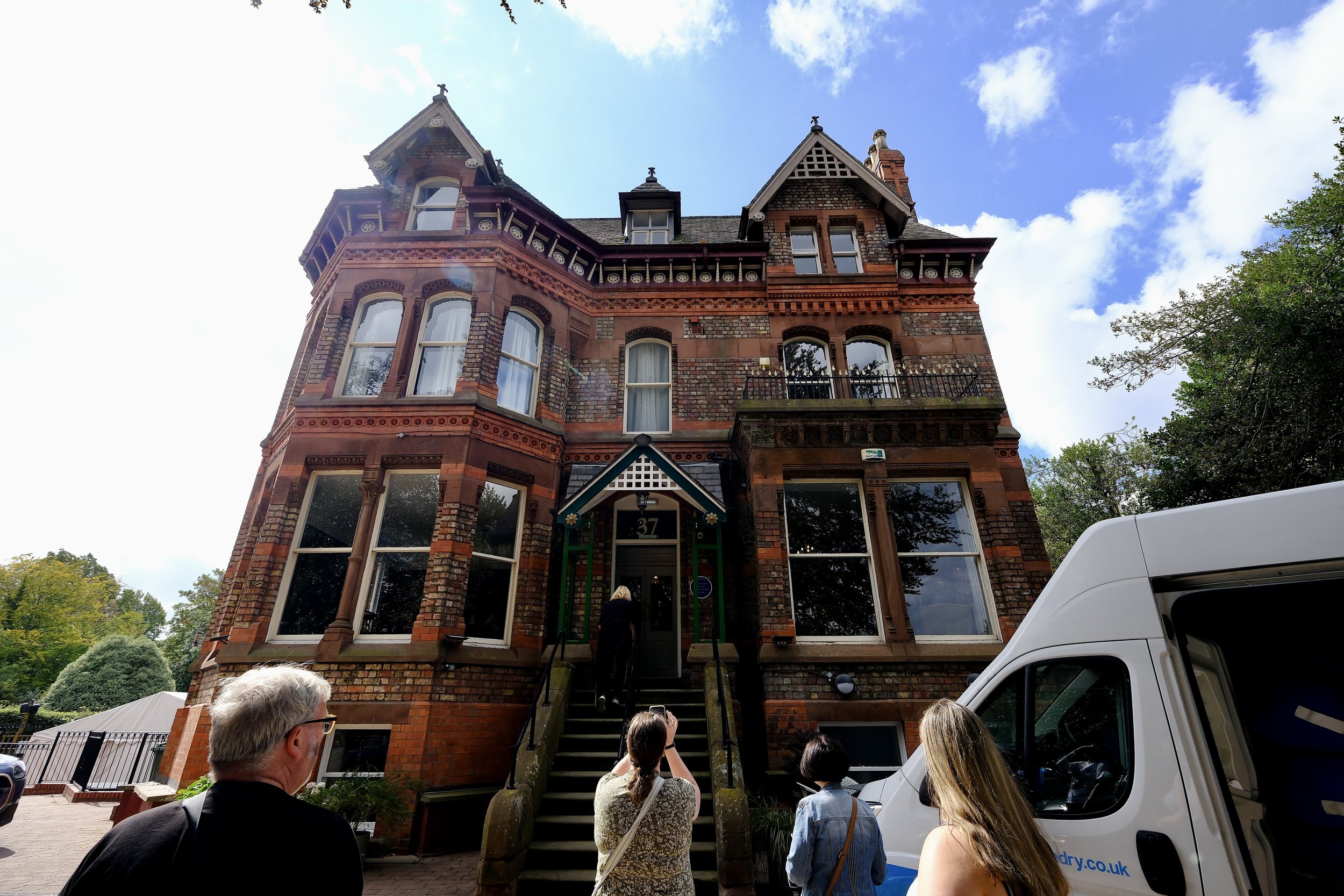
The Sefton Park Hotel, 37 Aigburth Drive (Image: Damien Wilkinson)
Now housing a Beatles themed hotel, The Sefton Park Hotel, we headed inside to take in the various photographs and memorabilia lining the walls of the whole hotel, in tribute to Sutcliffe, who tragically died of a brain haemorrhage, aged just 21.
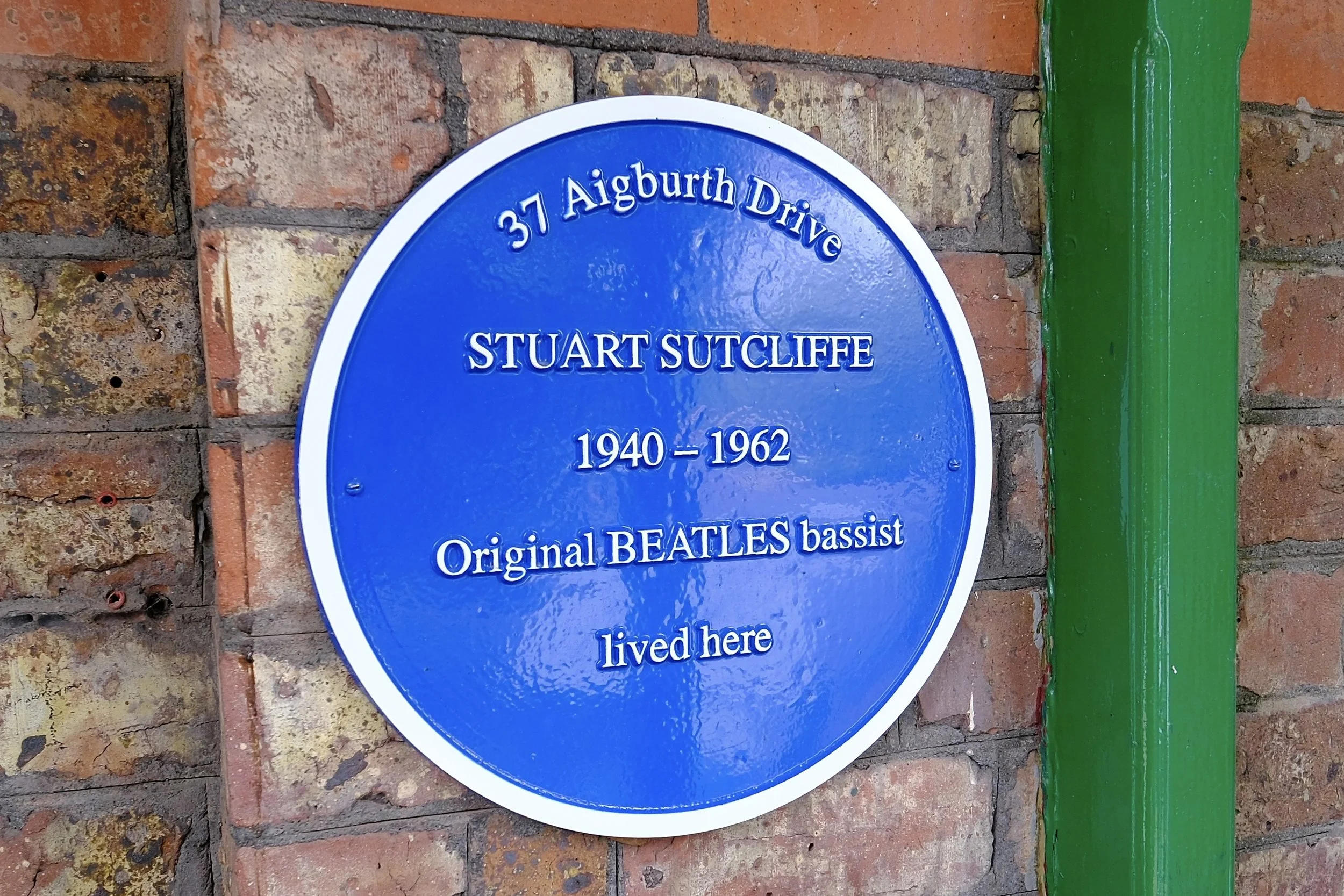
The Stuart Sutcliffe plaque at The Sefton Park Hotel (Image: Damien Wilkinson)
There is even a bar—Astrid’s bar—named in tribute to Sutcliffe’s fiancée Astrid Kirchherr.
The converted Victorian villa looks to be a great place to stay for any Beatles aficionado—further details can be found here.
Stop 3: Penny Lane
It wouldn't be a Beatles Tour without a visit to Penny Lane. We managed to find our way to the iconic street for the obligatory photo shots.
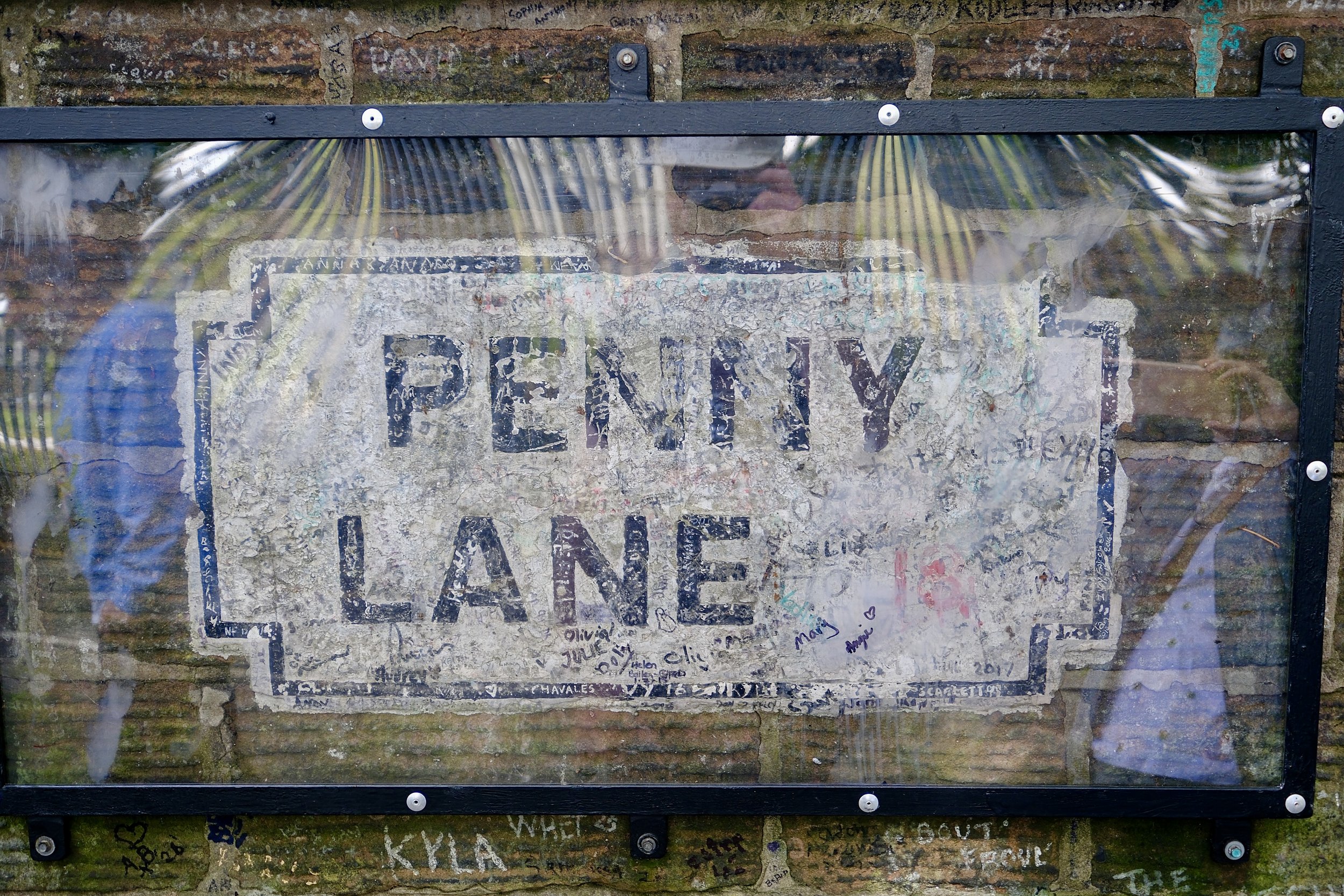
The Penny Lane street sign (Image: Damien Wilkinson)
Charlie lamented the constant graffiti of the sign, which despite the best efforts, has now meant the recently autographed section from Paul McCartney is now sadly obscured.
We also took time to visit the bus shelter and triangle of shops nearby, including Tony Slavin Barbers, that John and Paul would have frequented.
Stop 4: Strawberry Field
It was then back to Strawberry Field, for a pitstop in the shape of lunch and a welcome opportunity to look at the excellent facility there, including the fabulous museum charting the development of the site. It is a great interactive display, you are given a hand-held tablet and headphones to immerse yourself as you walk around the attraction.
The staff within the site are massively helpful and proud of the role they are playing in promoting their work and the heritage. There is a well stocked gift shop crammed full of Beatles memorabilia.
Stop 5: 25 Upton Green
Re-fuelled we headed back out on the road. This time a bit further afield, heading to Speke, to visit the childhood home of George Harrison.
Charlie handed over the reins for this part of the tour to Dale Roberts a local tour guide, who also owns a share of the property, and he began giving us some overall context surrounding the house in Speke.
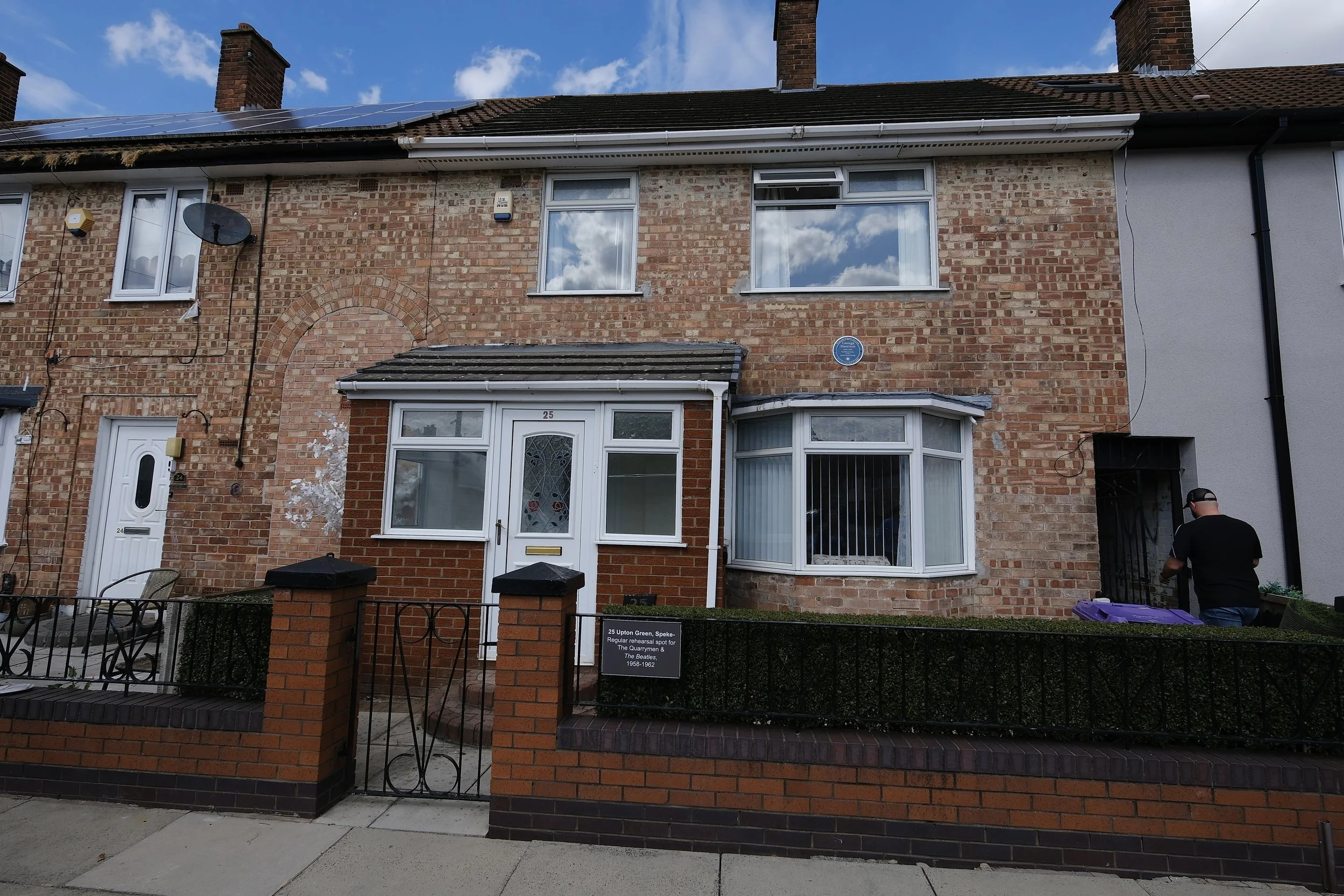
25 Upton Green, Speke (Image: Damien Wilkinson)
In the wake of recovery from the blitzing of Liverpool during WW2, many of the areas were demolished and families re-located to areas further outside the city such as Speke. The Harrison family became part of this, whilst not actually being in a designated slum area, had waited an inordinate amount of time (18 years) on a waiting list, so were overjoyed when they were moved from their two-up, two-down dwelling at 12 Arnold Grove, Wavertree to 25 Upton Green, Speke around 1949/50.
As Dale recounted, the extra space was massively welcomed by the Harrison family, George wheeling around his new bedroom in much excitement.
Harrison would live here until around 1962, so spent many of his formative years here. Importantly this coincided with Paul McCartney’s residence in Speke at 72 Western Avenue, where he lived from 1947 to 1955. The pair would share rides on the 86 bus to the city centre.
“The morning bus was where we two would meet
I sat beside you on an empty seat
We’d talk about guitars and rock and roll
They were the subjects that would nеver grow old”
The house itself is privately owned, operating as a short stay rental house, but has undergone a retro-transformation to recreate many of its rooms to how they were back in Harrison’s day.
This includes the main living-room, with its floral patterned wall paper, settee and chairs, a period piano, and bedroom stripped back to its stark 1950s setting. George’s room also has a record player which originated from Forthlin Road (a nod to where McCartney also resided) and wallpaper that is actually genuine 1950s stock.
The original enamel bath remains as well as the outside toilet, offering photo opportunities for the lavatorially inclined!
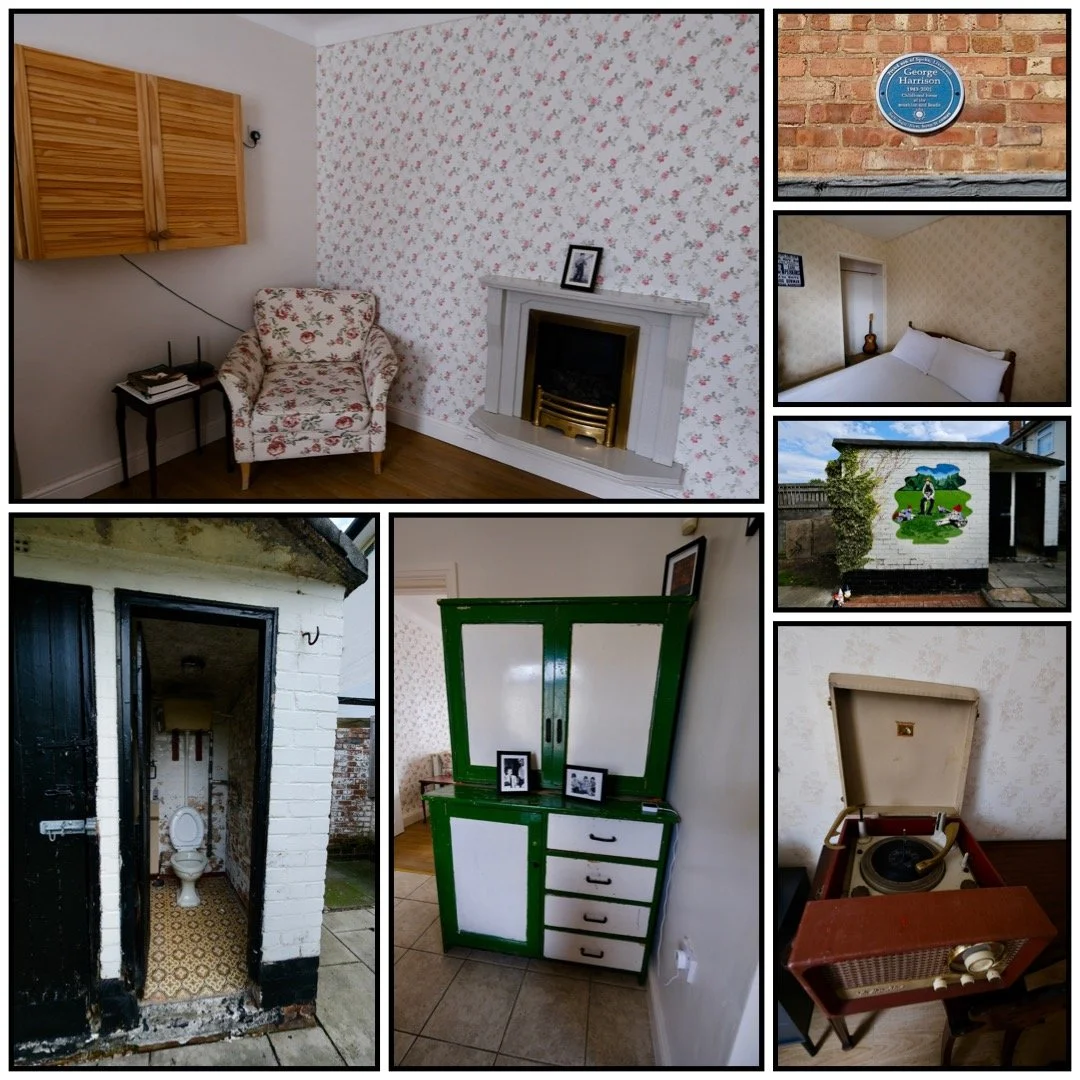
Some of the images from 25 Upton Green (Images: Damien Wilkinson)
With George’s mum, Louise a key supporter of his musical adventures and his older friends John and Paul, the house was used for frequent band practice sessions. It also was the site of the famous photographs of George departing, proudly holding his guitar case before heading to a gig.
It also emphasises, the often somewhat overlooked, strong bonds that Harrison and McCartney forged during what was a pivotal period of time.
Dale was a fountain of Beatles knowledge which greatly enhanced our visit to the house.
Although heavily booked, check Dale’s website for availability for future stays at this uniquely historic site—it’s the only Beatles house you can actually stay the night in!
Stop 6: Dungeon Lane
With Paul McCartney’s recent album The Boys of Dungeon Lane, there has been a flurry of interest in this area of Speke, where McCartney would take walks down the shore-line.
When I say interest, this has also transpired into a spate of street sign theft. With McCartney’s album consisting solely of the aforementioned sign, it can be a case of luck as to whether the sign will still be there when you visit!
Thankfully, we were in luck, one of the signs being correct and present.
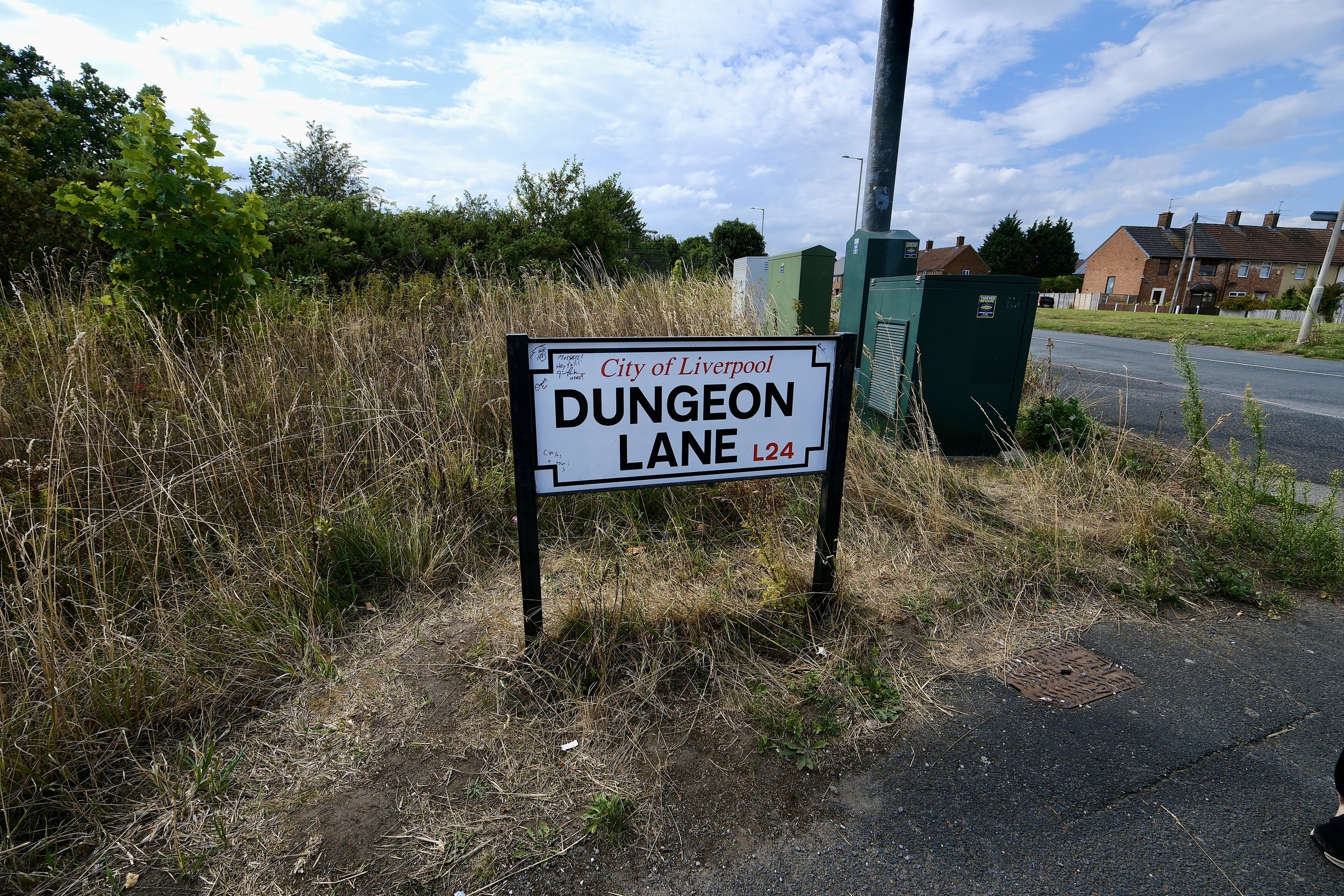
The now famous Dungeon Lane street sign (Image: Damien Wilkinson)
Stop 7: Mendips, 251 Menlove Avenue
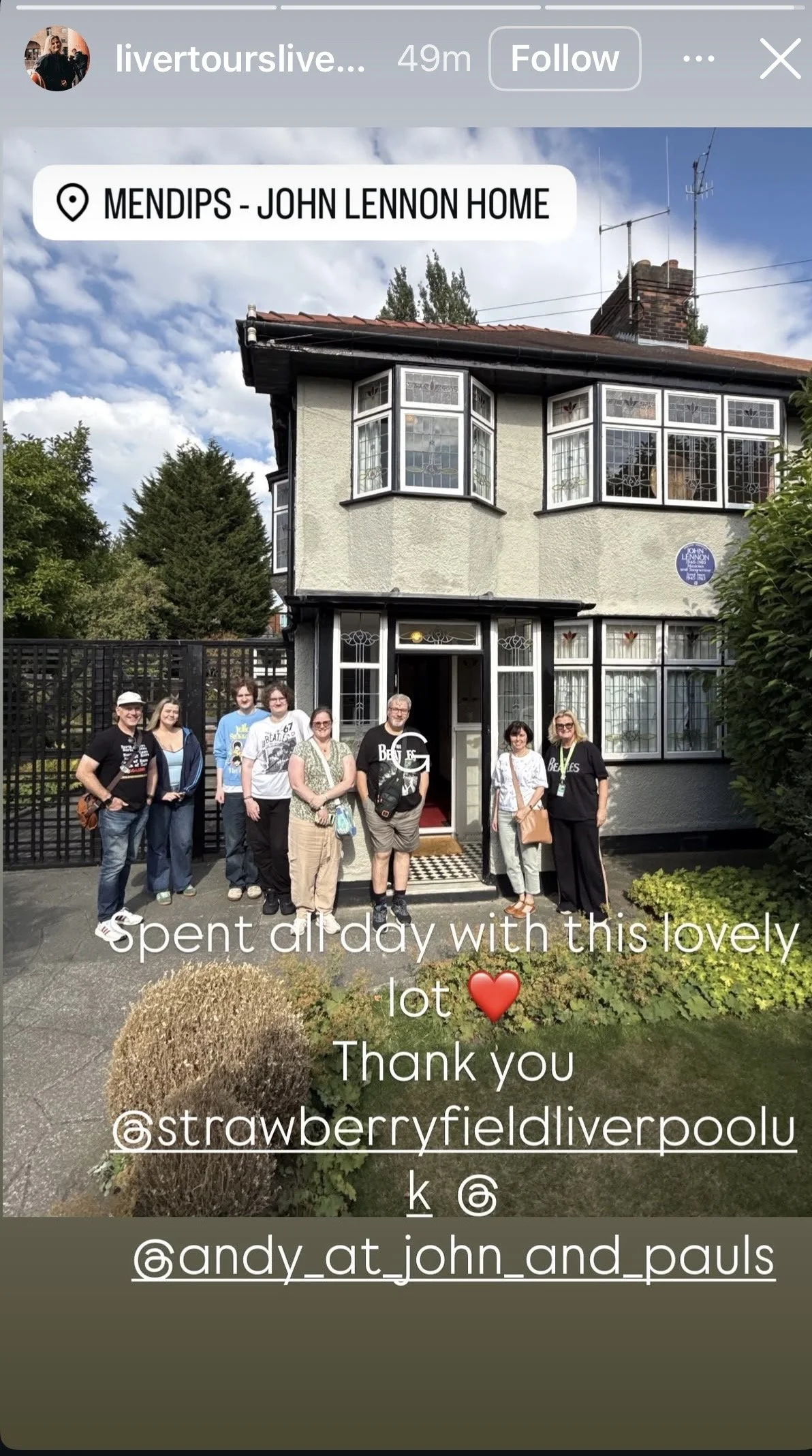
Our tour party at Mendips (Image: c/o Charlie Martin, Liver Tours)
As somewhat of an unexpected bonus, Charlie managed to snag us a tour of John Lennon’s residence on 251 Menlove Avenue, namely Mendips, where his lived with his Aunt Mimi from 1945 to 1963.
It’s a painstakingly restored National Trust owned house, with all of its features lovingly recreated and is like walking into a time capsule. It positively reeks of the 1950s and you can almost sense John listening to The Goons, playing guitar and hear the legendary practice sessions with the other lads in the porch.
Stop 8: 20 Forthlin Road
Time also permitted us to squeeze a quick photo opportunity at what is perhaps Paul McCartney’s most notable childhood residence, 20 Forthlin Road.
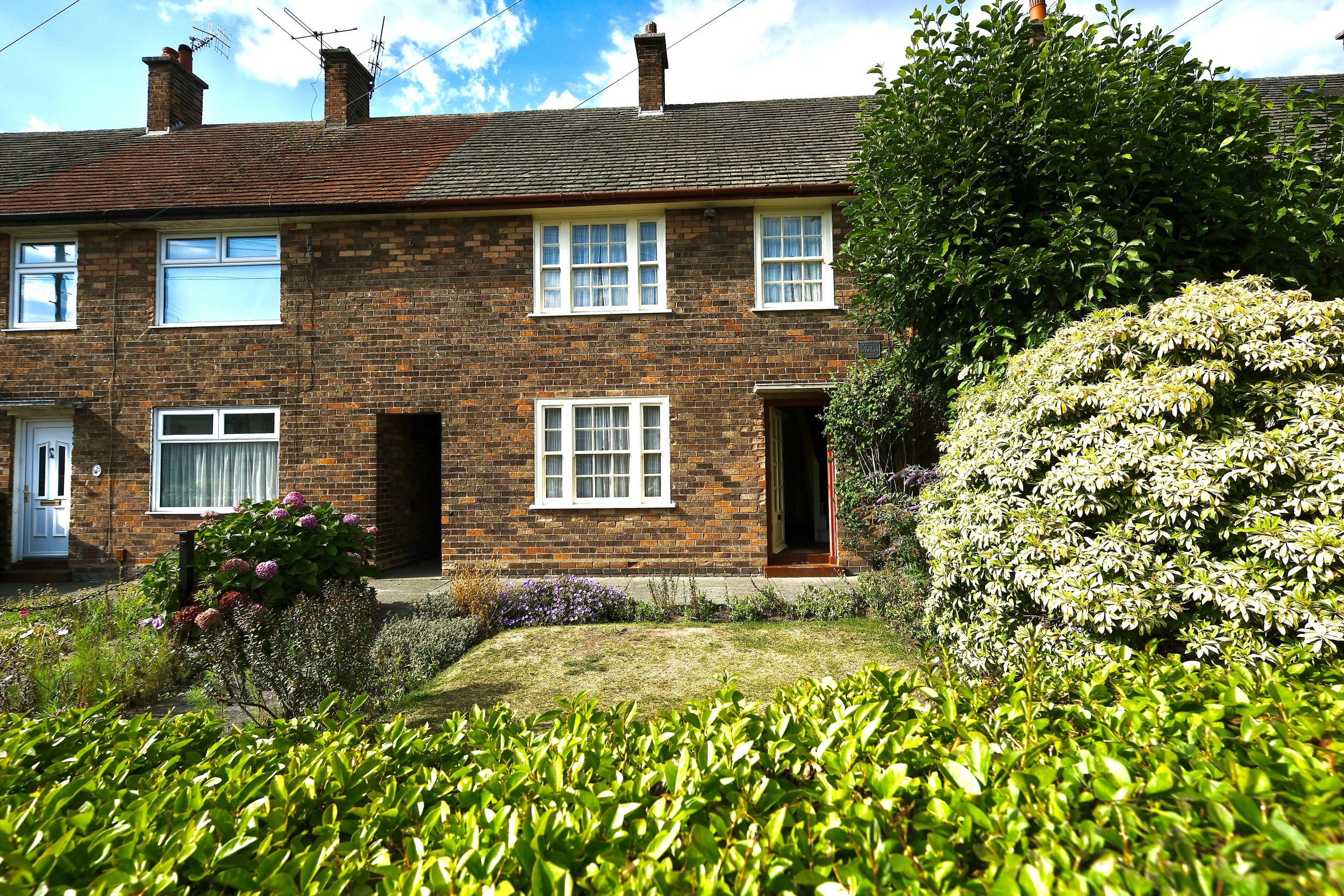
20 Forthlin Road (Image: Damien Wilkinson)
Stop 9: Strawberry Field (Revisited)
Ending up back at Strawberry Field allowed us to tour the beautiful gardens there, which now includes a wonderful Rose Garden tribute to Sir Giles and Lady Judy Martin.
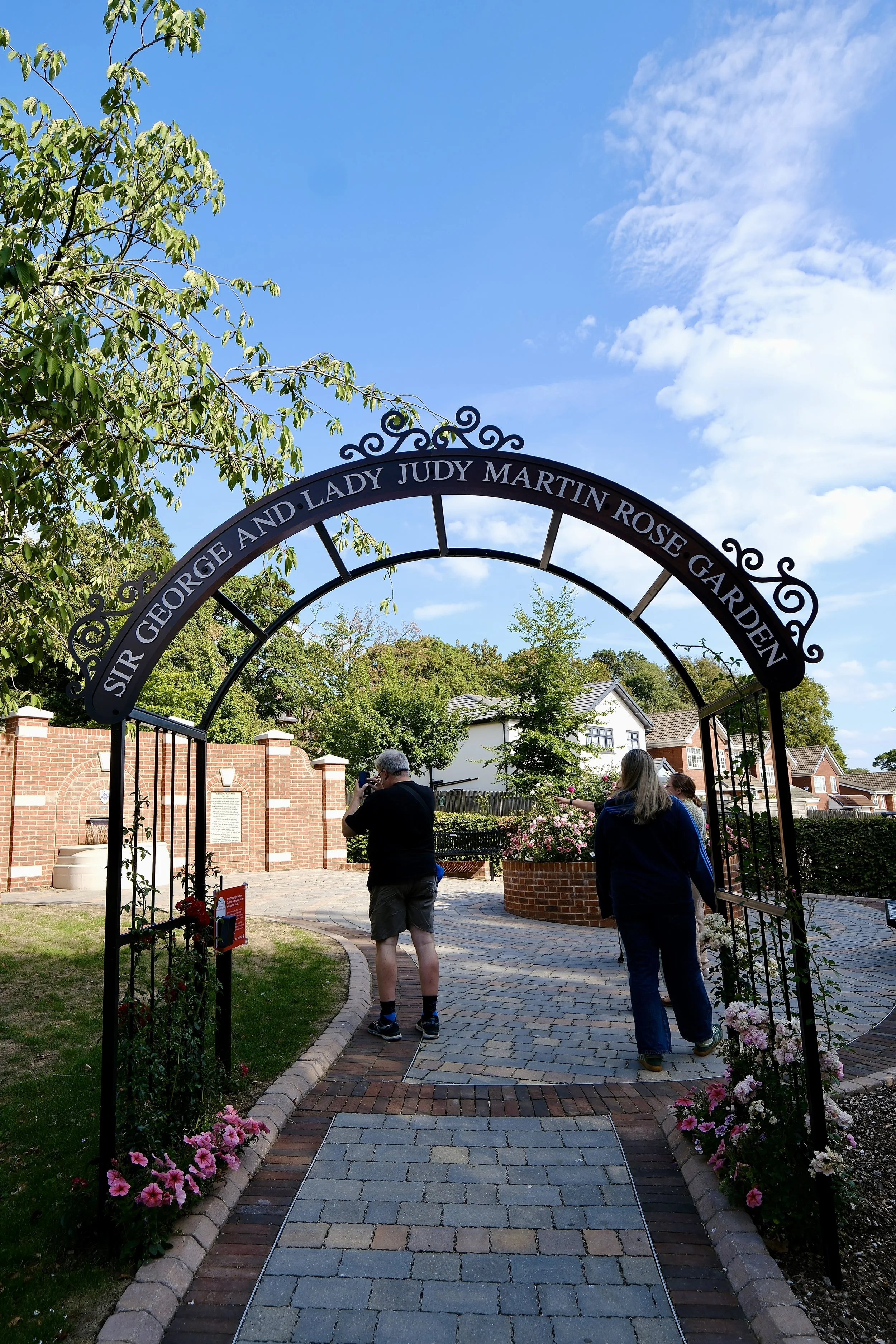
The Sir Giles and Lady Judy Martin Rose Garden (Image: Damien Wilkinson)
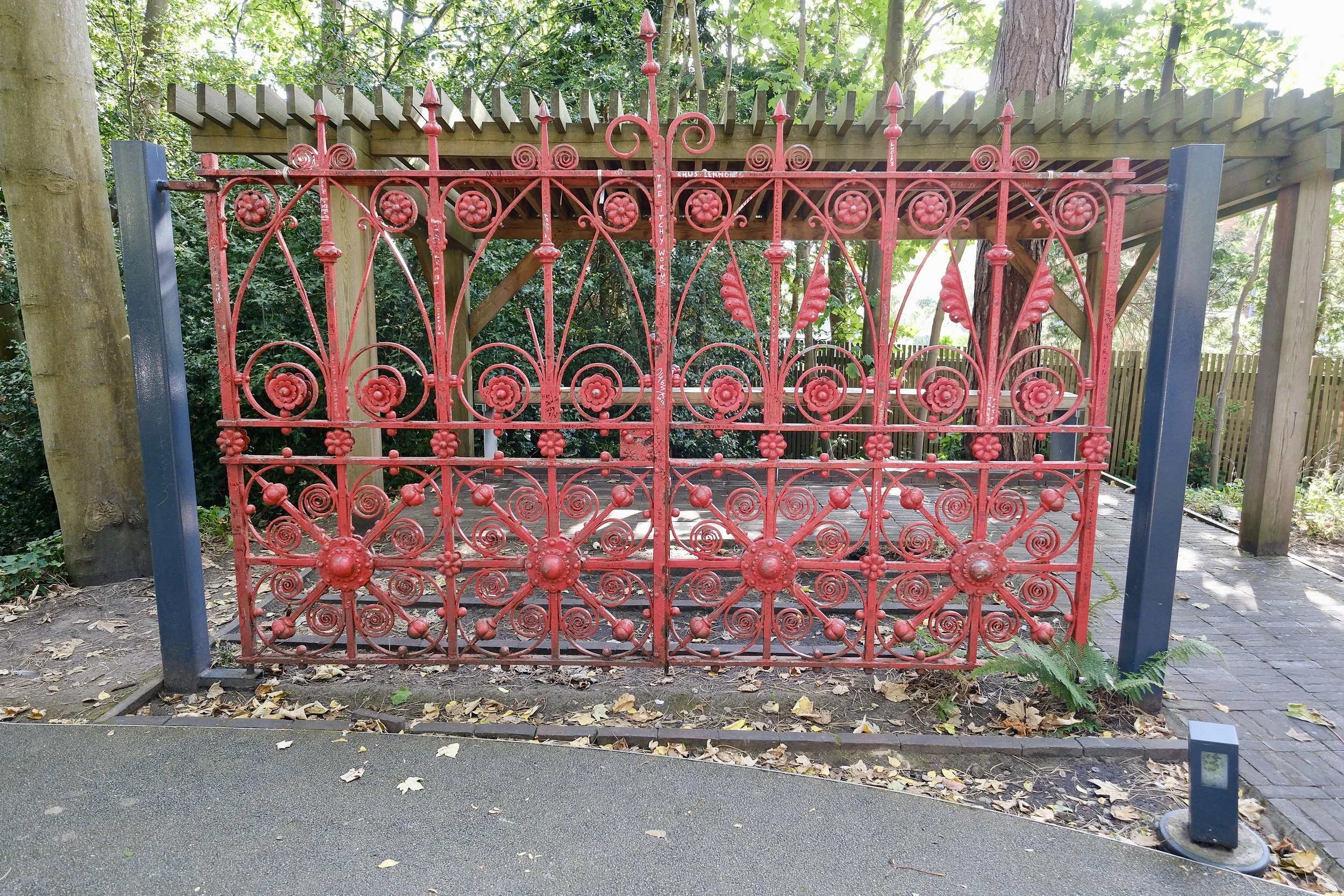
The original red gates at Strawberry Field (Image: Damien Wilkinson)
In the gardens you can also view the original red gates (stolen and recovered in May 2000) as well as a lovingly recreated bandstand with a wonderful mural depicting important people within the history of the site.
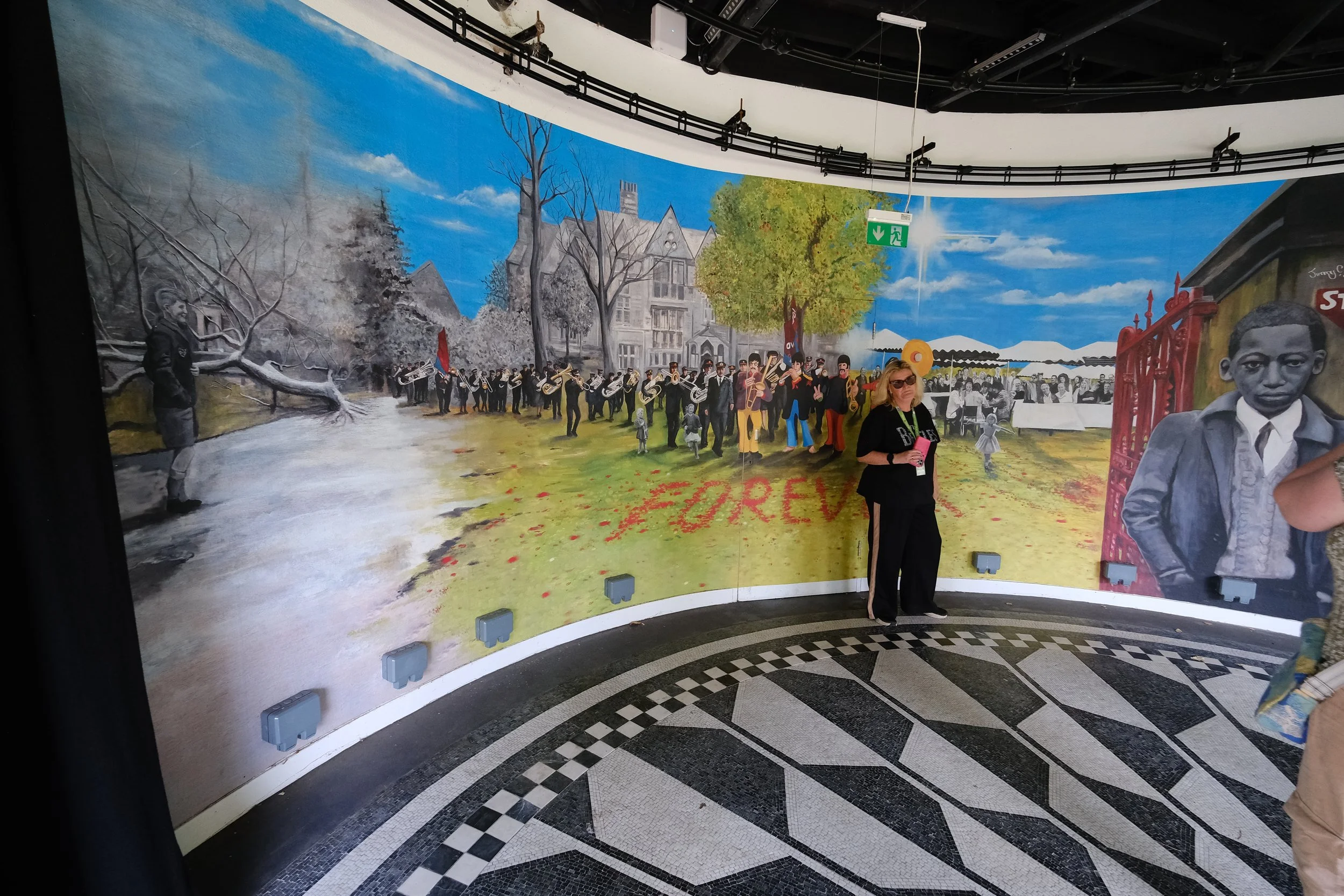
Charlie at the mural within the bandstand (Image: Damien Wilkinson)
As you walk around the gardens there is even a super-imposed image of the original mansion so you can picture how it looked in the grounds
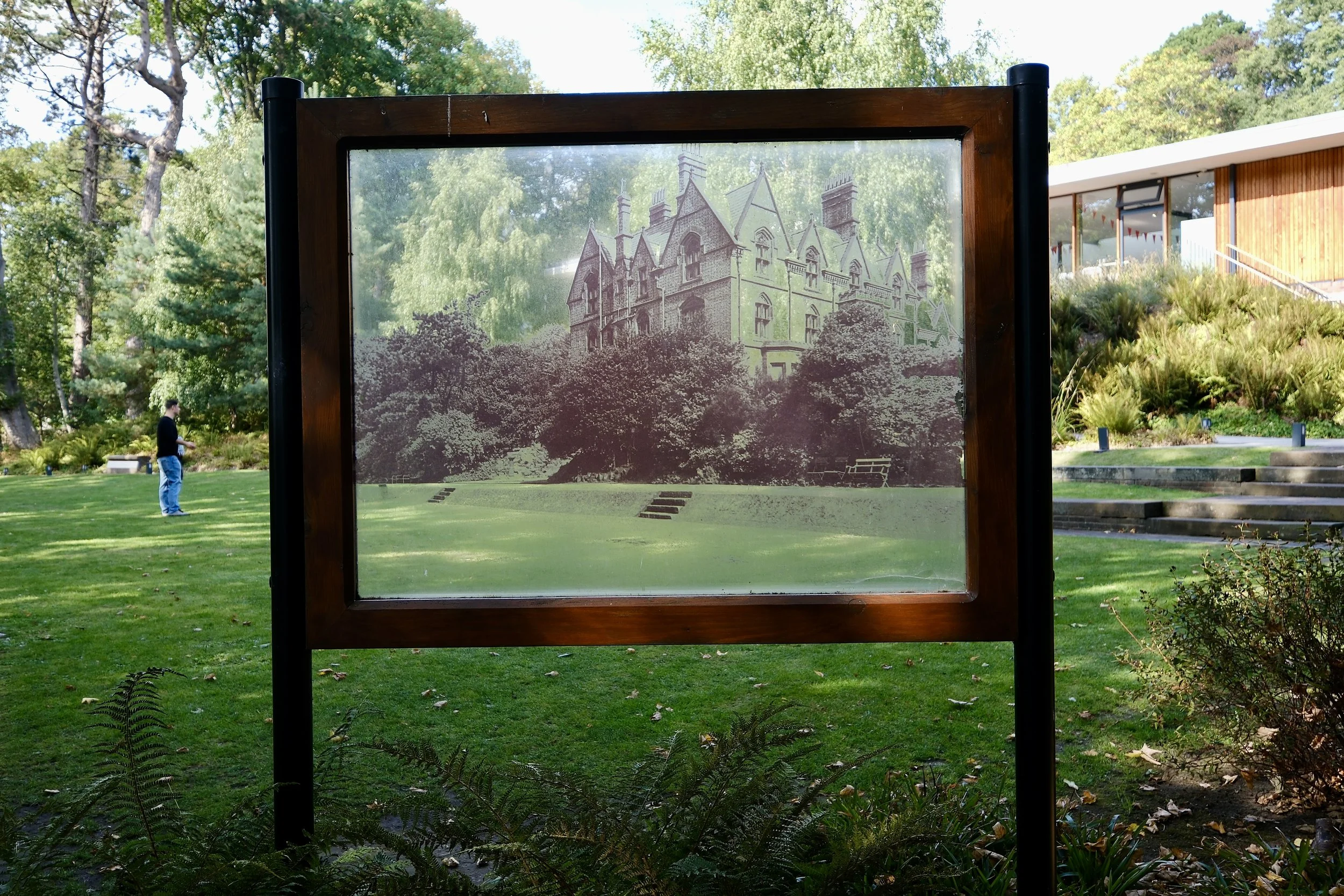
How the Mansion looked (Image: Damien Wilkinson)
Walking around the peaceful gardens was a fitting end to a glorious day.
A Day In the Life
I’ve been on a number of Beatles themed trips previously (Magical Mystery Tour, The National Trust Homes tour) but this represented an immersive jump into the wonderful tapestry of history woven around the Fab Four.
Charlie Martin was a fabulous host, her passion and love for The Beatles and Liverpool itself shone throughout the day. A big shout out also to Derek Smith from Peterborough whose incredible knowledge of The Beatles added some further depth and colour to our tour.
It was an excellent way to dive deeper into the subject matter and is highly recommended for any Beatles devotee or anyone wanting to find out what it’s all about and feel the real love.
In the words of John Lennon himself:
Strawberry Fields Forever!!
Footnote:
Throughout the day, all of the guides were keen to qualify the sources of their stories, noting that all information is corroborated by at least one other source to ensure its validity and remove some of the ‘shaggy dog’ stories that frequently emanate.
See also my other Liverpool related articles - a review of the Cavern Club and Cavern Pub and also an archive review of Little Steven’s legendary lunchtime gig at the Cavern.
