
HELLO, HELLO: Bow Street Museum of Crime & Justice, London
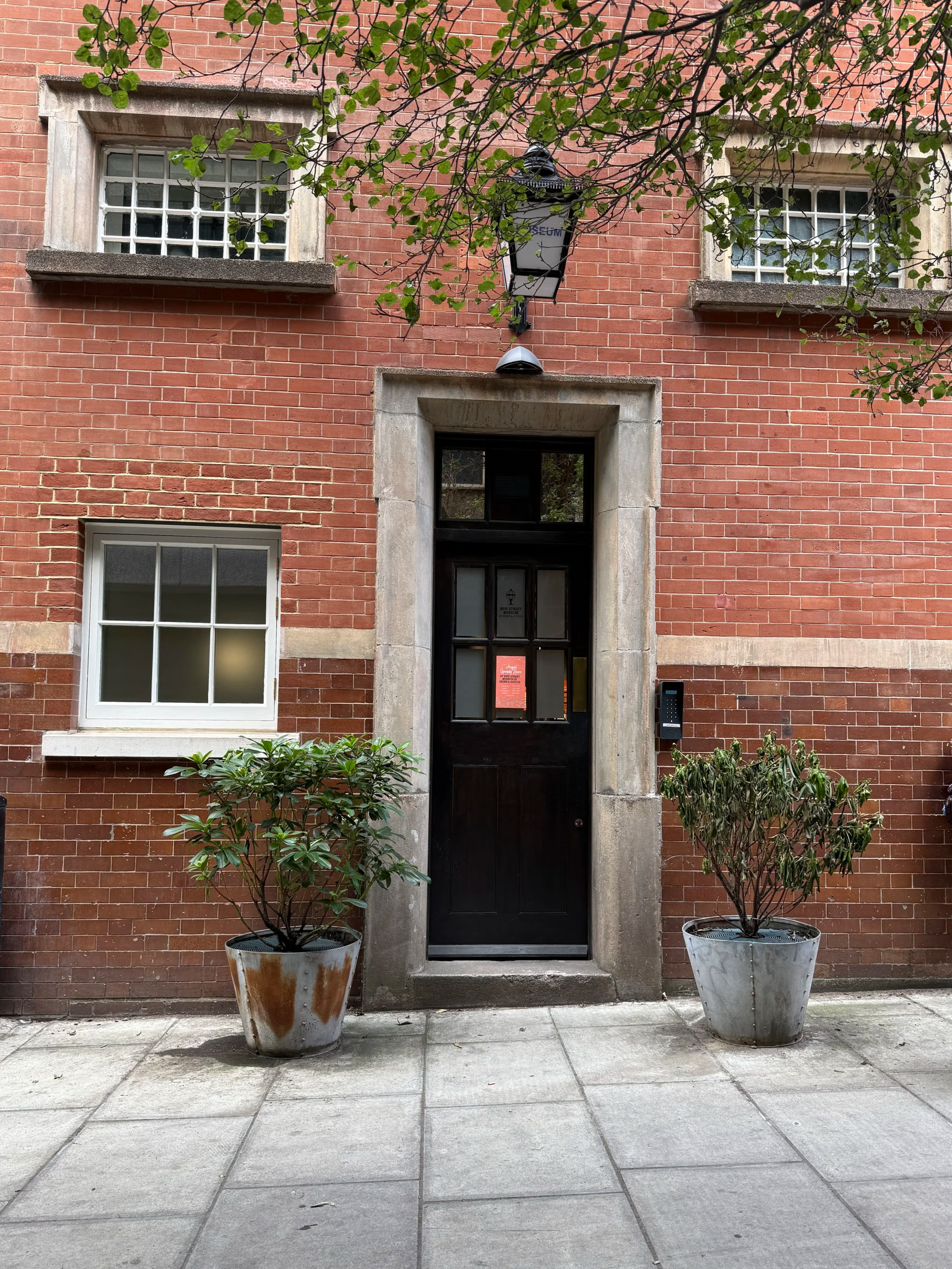
The Museum entrance, off Bow Street (Image: Damien Wilkinson)
Let’s Be Having You
With time to spare in London, an opportunity arose to visit the Bow Street Museum of Crime & Justice.
A train delay on the way down South meant a trip in vain for the originally allocated time, arriving just as it shut at 4.30pm, but the staff kindly honoured the ticket on the following day.
The museum, which is London’s newest museum, is located in Covent Garden, 28 Bow Street, which is opposite the National Opera House and is a couple of minutes walk from the tube station.
Taking Down the Particulars: What’s It Like?
Firstly, it’s a small museum which is reflected in a ticket price of £10, so don’t be expecting the National Gallery.
However, what it does represent is a thick slice of London history, stretching right back to 1740.
I’d allow around 45 minutes or so to check out the museum, though you could probably rattle around in 30 minutes if you are a quick reader!
The museum consists of a number of displays which tell the story of what was one of the first police stations in London.
The story starts in the main hall way directly after the entrance, where the Magistrates’ Court Dock is now housed. It was salvaged when the building was acquired in 2017, and was formerly in Court No. 2 on the first floor. Oscar Wilde, Dr Crippen, the Pankhurst suffragettes amongst others, sat or stood on this dock during the course of their hearings.
There is a timeline of events from 1740 onwards placed around the room with a number of glass cabinets filled with various artefacts, police whistles, truncheons, uniform and the like, which all set the scene well.
You’ll learn all about the famous Bow Street Runners as well as many of the characters that inhabited the station as it grew from its original Bow Street location.
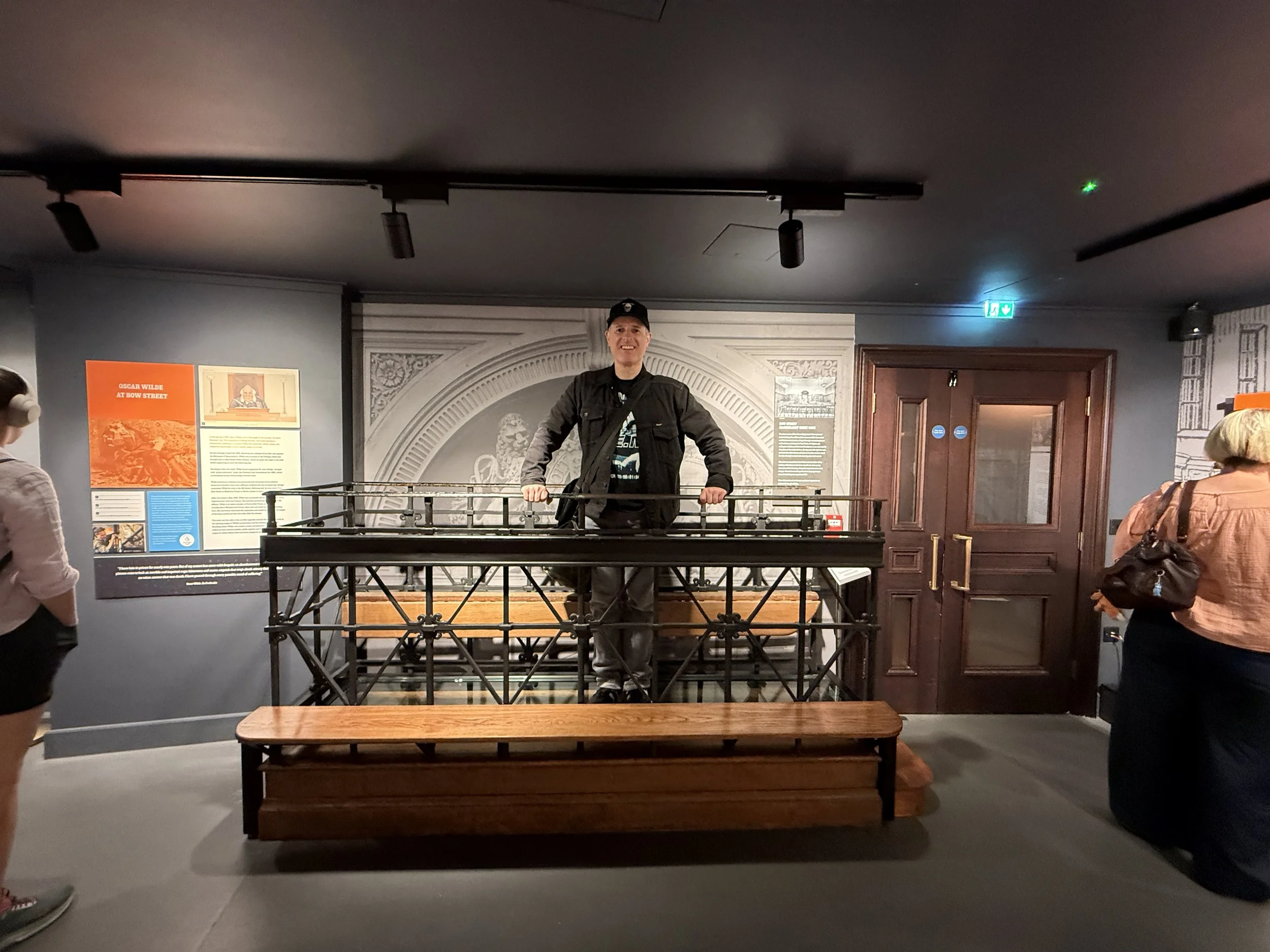
Kieran Wilkinson stands in the dock (Image: Damien Wilkinson)
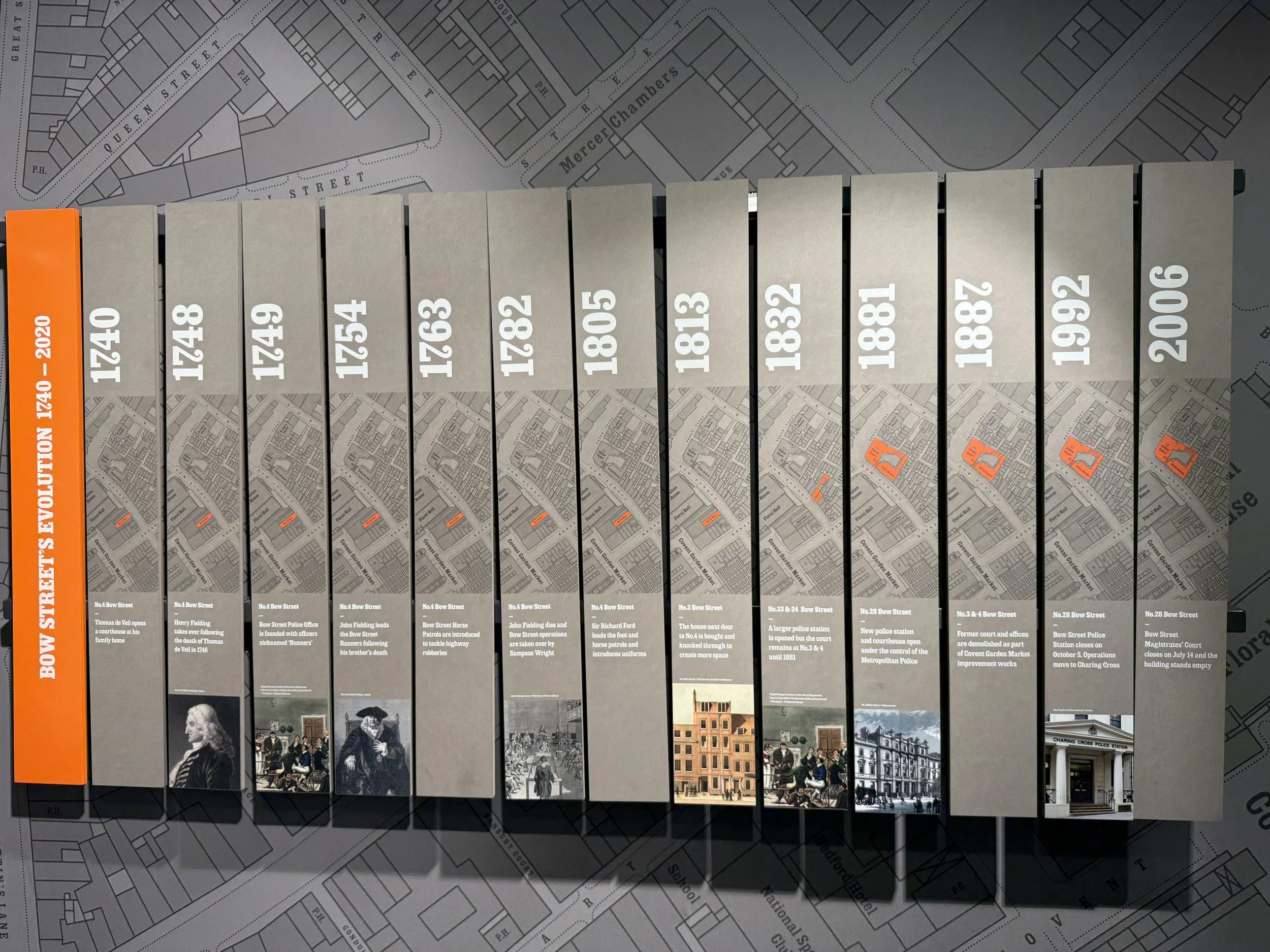
The time line from 1740 to 2006 (Image: Damien Wilkinson)
From the main hall you are moved onto the cells of which there are six. They are still laid out in their original structure, with armoured cell doors opening to reveal a small stone bed with a thin padded mat, uncovered toilet and small window on the far wall with the obligatory cell bars. The lavatory mechanics are still in place—a cistern outside each cell and flushing buttons on the inside wall.
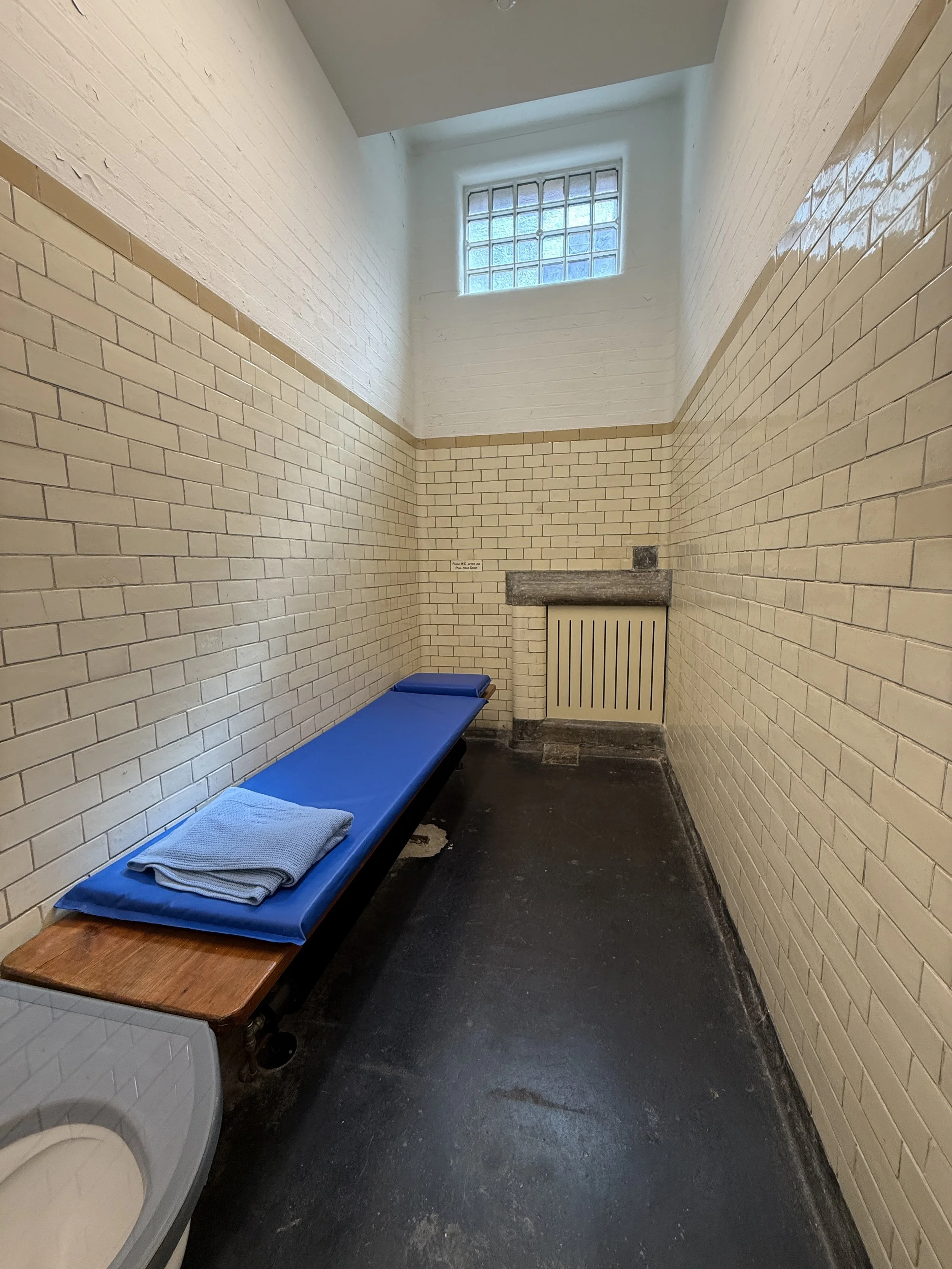
Cell One at Bow Street Museum of Crime & Justice awaits an inmate? (Image: Damien Wilkinson)
You can pop into all the cells, one is left as if awaiting an inmate, the others have either photographic displays or in the case of cell 2, you can watch a 10 minute video presentation about the police station. A number of ex-officers talk passionately about their time working at the station, mainly in the 80s and 90s.
One of the cells was set up for some interactive/ participation activities—flip charts and worksheets—to facilitate more structured group tours.
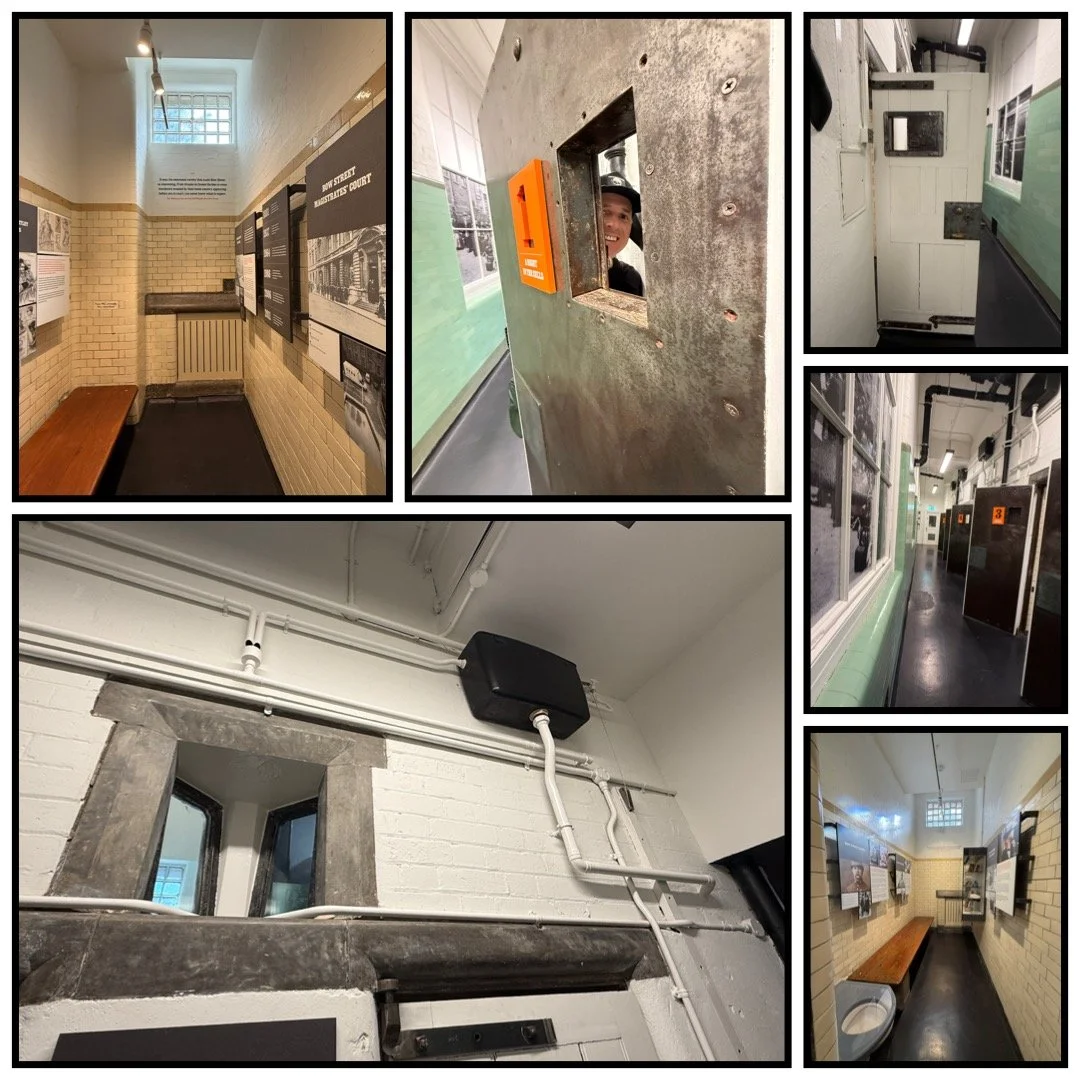
Various shots around the cells (Images: Damien Wilkinson)
Beyond famous domestic names like Oscar Wilde and the Kray Twins, Bow Street was Britain's primary hub for global extradition hearings. International figures ranging from 18th-century Italian lover Giacomo Casanova to WWII propaganda broadcaster 'Lord Haw-Haw' passed through. In more recent history, it was where Chilean dictator General Augusto Pinochet faced extradition proceedings in the late 1990s.
High-profile politicians processed through its dock included disgraced Tory MPs Jonathan Aitken and Jeffrey Archer on perjury charges, as well as Harvey Proctor. In its final years before closing in 2006, the court regularly saw Libertines frontman Pete Doherty have his collar felt—appearing in the dock for various drug and driving offences.
Once you have made your way around, there’s a gift shop by the reception area, stocked with a decent selection of books about policing and some of the associated characters already mentioned.
Passing Sentence: The Verdict
There are plenty of fascinating facts and stories to while away an hour in London. While the museum is a fairly no-frills setup, it’s a brilliant way to learn about the evolution of policing in the capital, right at the source where it all began.
Move along now…
The Museum opens Friday, Saturday and Sunday (11.30-16.30) throughout the year, but is also open on Thursdays during the school holidays and August.
The Museum hosts group tours, private tours, family workshops and special events, such as Summer Evening Talks, Summer Walking Tours and also offers venue hire.
See the Museum’s website for more details.
If you enjoyed this review, check out my review of the London Postal Museum, another great place to spend some time when down in London.
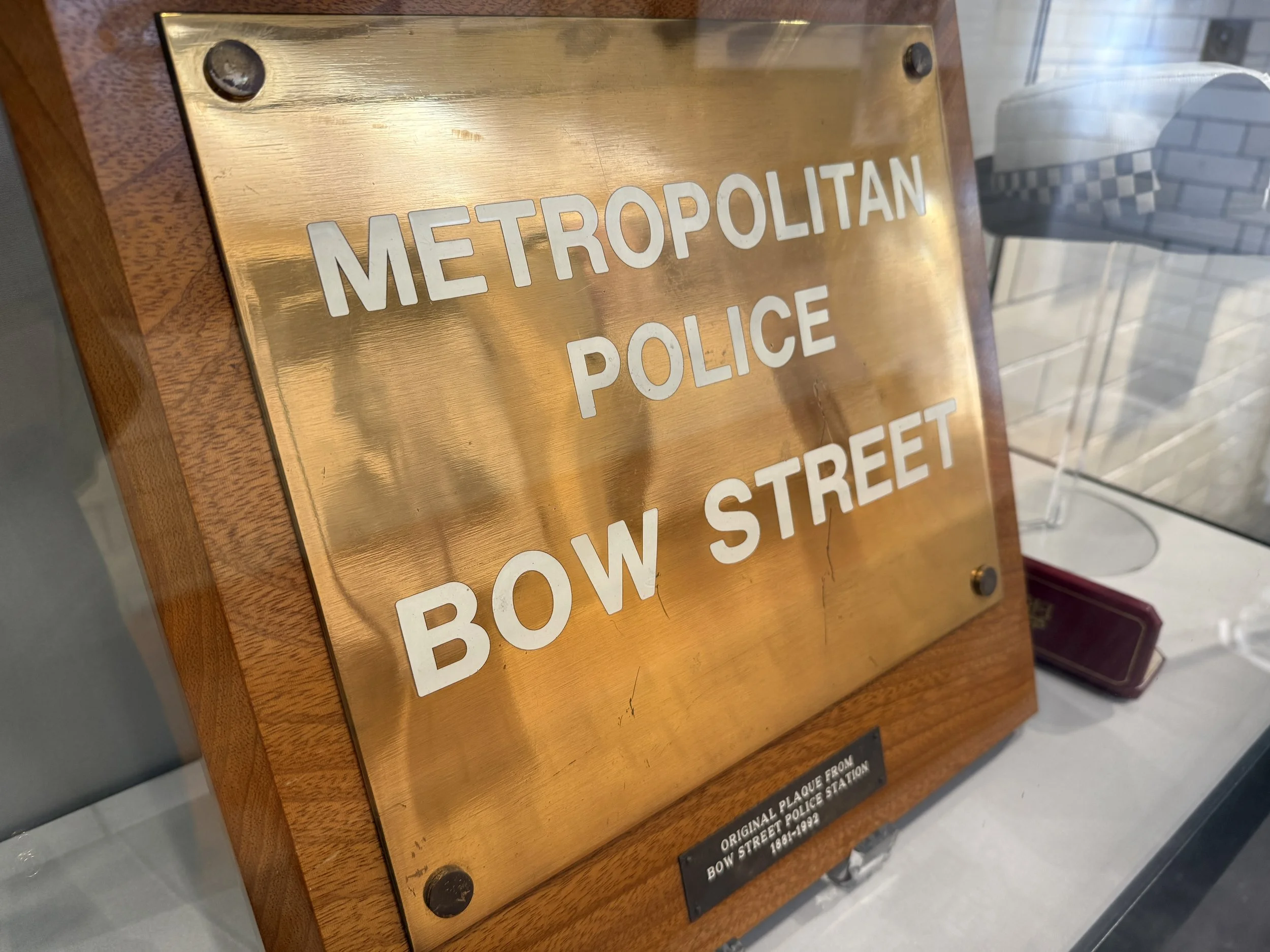
Original Plaque from Bow Street Police Station 1881-1992 (Image: Damien Wilkinson)
